Dehradun's Rs 16 Crore Maldevta Bridge Collapses After 16 Days, Sparks Structural Integrity Inquiry
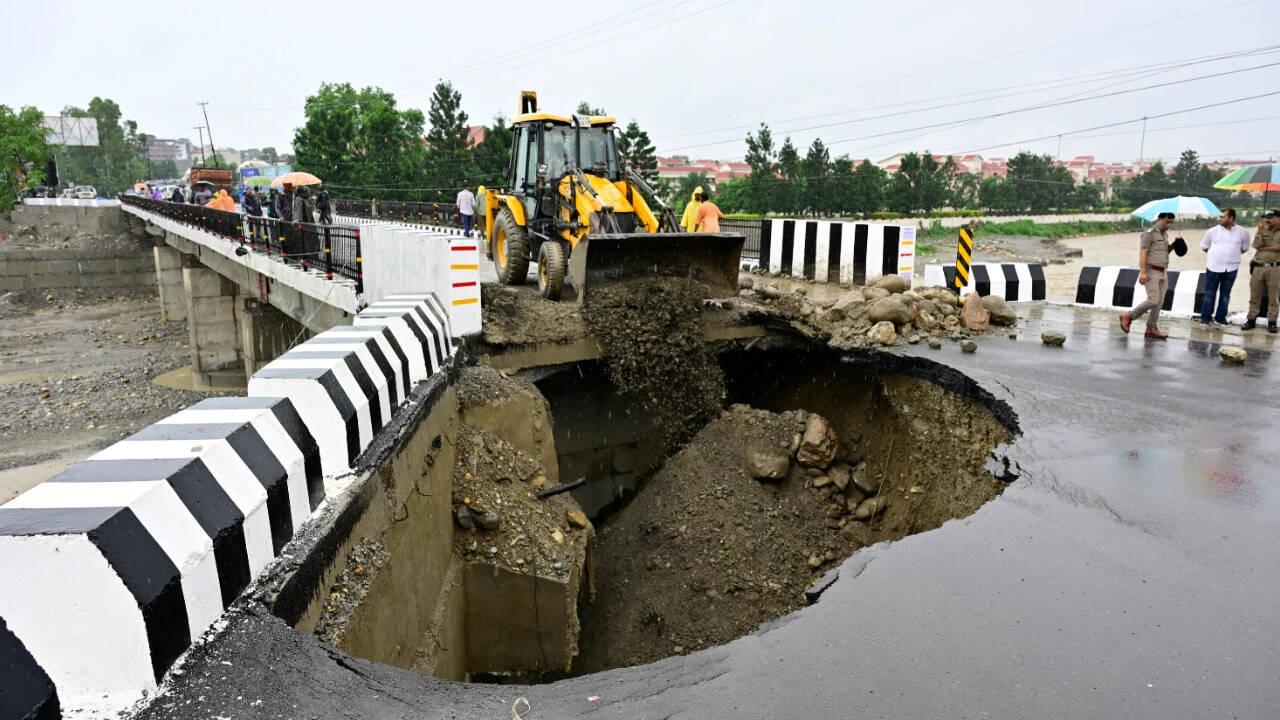
TL;DR Summary
- A newly constructed Rs 16 crore bridge in Dehradun, Uttarakhand, collapsed just 16 days after its inauguration due to heavy monsoon rains.
- The bridge, located at Maldevta, was a crucial connectivity link, and its failure has raised serious concerns regarding structural integrity and construction quality.
- Authorities have launched a formal inquiry into the incident, focusing on design, materials, and the accountability of the construction agency.
In-Depth Report
Recent Infrastructure Failure
Dehradun, the capital of Uttarakhand, is currently grappling with the aftermath of a significant infrastructure failure: the collapse of the newly inaugurated Maldevta bridge. Constructed at an estimated cost of Rs 16 crore, the bridge gave way on August 10, 2023, following incessant heavy rainfall. This incident occurred a mere 16 days after its official opening, sending ripples of concern across the state regarding public works standards.
Details of the Collapse
The bridge, situated near the Maldevta picnic spot, was a vital artery connecting numerous villages to the main city and facilitating tourism. The collapse was sudden and comprehensive, rendering the section impassable. Fortunately, no casualties were reported at the time of the incident, as traffic had been sparse due to the adverse weather conditions. Local residents and commuters have expressed profound shock and disappointment over the rapid deterioration of a recently completed public asset.
Immediate Official Response
Following the collapse, local administration and engineering officials promptly visited the site to assess the damage. Initial statements from authorities indicate a serious inquiry will be launched to ascertain the precise causes behind the failure. Questions are being raised about the bridge’s design specifications, the quality of construction materials used, and the adherence to safety protocols during its construction phase. The state government has acknowledged the gravity of the situation and assured a thorough investigation.
Engineering and Quality Concerns
The remarkably short lifespan of the bridge has put the spotlight squarely on the engineering and quality control processes employed by the construction firm and supervising agencies. Experts suggest that a bridge, especially one built in a geologically sensitive and monsoon-prone region like Uttarakhand, should be designed and constructed to withstand significant hydrological and seismic stresses. The swift collapse points towards potential deficiencies in either the foundational work, the superstructure, or the quality of materials, warranting a detailed technical audit.
Financial and Operational Setbacks
The destruction of the Maldevta bridge represents not only a significant loss of public funds amounting to Rs 16 crore but also a severe operational setback for the region. The reconstruction efforts will necessitate further financial allocation and will inevitably cause prolonged inconvenience to the local populace, who relied heavily on this connectivity for daily commutes, economic activities, and access to essential services.
Background & Context
A Crucial Connectivity Project
The Maldevta bridge was conceived as a crucial infrastructure project aimed at improving connectivity in a region frequently affected by natural calamities, particularly during the monsoon season. Its construction was part of a broader effort to enhance road networks in Uttarakhand, which often face disruptions from landslides and flash floods. The area around Maldevta is known for its scenic beauty and picnic spots, making the bridge important for both local residents and tourists.
Uttarakhand’s Vulnerability to Monsoons
Uttarakhand, nestled in the Himalayan foothills, is inherently vulnerable to the vagaries of the monsoon season. Heavy rainfall frequently triggers landslides, flash floods, and riverine erosion, posing significant challenges to infrastructure development and maintenance. The design and construction of structures in such terrains demand exceptional resilience and adherence to stringent engineering standards to ensure longevity and safety. The Maldevta bridge was expected to embody this resilience, making its rapid collapse all the more concerning.
Historical Precedents and Public Trust
This incident, while singular in its swiftness, is not entirely isolated in the broader national context of infrastructure challenges. Instances of public infrastructure failing prematurely have, on occasion, eroded public trust in governmental oversight and construction quality. The Maldevta bridge collapse thus amplifies existing concerns about accountability, transparency, and the efficacy of quality control mechanisms in public sector projects, especially in sensitive regions.
Why It Matters (Impact Analysis)
Disruption and Economic Burden
The immediate impact of the bridge collapse is profound disruption for the communities dependent on it. Daily commuters face longer detours, affecting livelihoods, access to education, and emergency services. The local economy, which relies significantly on tourism, will also experience adverse effects due to hampered accessibility. The loss of Rs 16 crore represents a direct burden on the taxpayer, money that could have been allocated to other pressing developmental needs.
Erosion of Public Trust and Accountability Questions
Beyond the immediate practicalities, the incident severely erodes public confidence in government-led infrastructure projects. When a significant public asset fails within weeks of its completion, it raises fundamental questions about accountability at every level – from the tendering process and contractor selection to project supervision and final certification. This can foster skepticism and distrust, potentially impacting future public initiatives and investments.
Call for Enhanced Oversight and Standards
This event serves as a critical reminder for implementing robust quality control, stringent engineering standards, and transparent oversight mechanisms for all public works, particularly in disaster-prone areas. It necessitates a thorough review of construction policies, a crackdown on any potential malpractices, and a clear framework for contractor liability. The outcome of the ongoing inquiry will set a precedent for future infrastructure development in Uttarakhand and potentially across India, emphasizing the imperative of building durable and safe structures for the public.
Key Takeaways
- The Maldevta bridge collapse underscores the critical need for rigorous quality control and accountability in public infrastructure projects, especially in challenging geographical terrains.
- The incident will likely prompt a comprehensive review of construction protocols and oversight mechanisms within Uttarakhand, aiming to prevent similar failures.
🔥 Recent Breaking News
- "SC Asked Me To Face Bullets": Mahua Moitra Allege... (Aug 15, 2026)
- मोइत्रांचा धक्कादायक दावा: 'SC ने गोळ्या झेलण्यास सा... (Aug 15, 2026)
- महूआ मोइत्रा: 'SC ने कहा गोलियों का सामना करो' - रात... (Aug 15, 2026)
- PoK Could Have Joined J&K If... Omar Abdullah's Claim! (Aug 15, 2026)
- "पाकव्याप्त काश्मीर भारतात असते तर...": उमर अब्दुल... (Aug 15, 2026)