CJP protest: 18 Delhi metro stations remain shut; heavy security at Jantar Mantar
TL;DR Summary
- Eighteen Delhi Metro stations were shut down due to a “Call for Justice Protest” (CJP), causing widespread commuter disruption.
- Massive security deployment, including paramilitary forces, encircled Jantar Mantar, the designated protest site.
- The measures highlight the ongoing tension between citizens’ right to protest and the state’s imperative for maintaining law and order.
In-Depth Report
The heart of India’s capital city, Delhi, found itself in an unprecedented chokehold today as eighteen of its crucial Metro stations were abruptly shut down, preempting a “Call for Justice Protest” (CJP). The extensive closures, primarily affecting stations in Central Delhi and those leading towards the protest hub of Jantar Mantar, transformed daily commutes into arduous journeys for millions and underscored the state’s firm stance on maintaining law and order amidst burgeoning dissent.
Unprecedented Metro Shutdown and Commuter Chaos
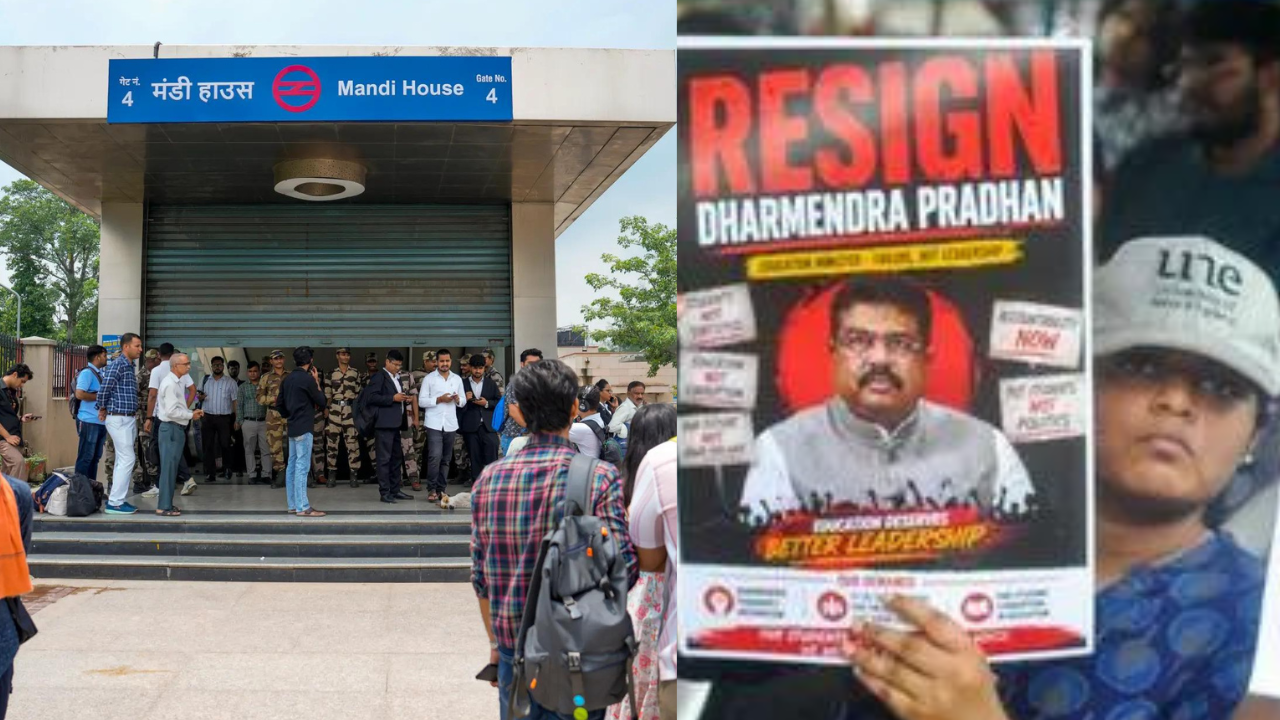
The Delhi Metro Rail Corporation (DMRC) issued advisories early morning, announcing the closure of stations like Patel Chowk, Central Secretariat, Udyog Bhawan, Lok Kalyan Marg, Janpath, Mandi House, Rajiv Chowk, and others, citing “security reasons” on police advice. This sweeping measure effectively isolated significant government buildings, business districts, and residential areas, forcing commuters to seek alternative, often lengthier, modes of transport. Buses were overflowing, cabs were in high demand with surge pricing, and arterial roads experienced unusual congestion, painting a vivid picture of the public inconvenience caused. While some stations were reopened in a phased manner later in the day, the initial blanket shutdown sent shockwaves through the city’s transport network.
Fortress Jantar Mantar: A Display of State Security
The iconic protest site of Jantar Mantar, usually a crucible for diverse demonstrations, was transformed into a veritable fortress. Thousands of police personnel, including paramilitary forces, were deployed, erecting multiple layers of barricades, installing drone surveillance, and setting up rigorous checkpoints. Access to the area was severely restricted, with only accredited media and authorized personnel allowed through. Section 144 of the CrPC, prohibiting the assembly of four or more people, was reportedly enforced in surrounding areas, effectively neutralizing the protest before it could fully materialize. This heavy-handed security apparatus aimed to deter large gatherings and prevent any potential escalation, reflecting the authorities’ determination to prevent any breach of peace in the national capital.
The CJP’s Stated Objectives and Restricted Voice
While the specific demands of the “Call for Justice Protest” (CJP) were varied and multifaceted, they generally coalesced around issues of social justice, human rights, and governmental accountability. Organisers had intended to highlight alleged systemic failures and demand immediate redressal for grievances ranging from economic disparity to violations of fundamental freedoms. However, the comprehensive security lockdown severely hampered their ability to gather in significant numbers or to project their collective voice effectively. Many potential participants reported being turned back or diverted long before reaching Jantar Mantar, leading to frustration and accusations of stifling democratic expression.
The day’s events thus stand as a stark illustration of the delicate balance between the constitutional right to protest peacefully and the state’s responsibility to ensure public safety and order. The scale of the preventive measures raises pertinent questions about their proportionality and their long-term implications for democratic spaces in India’s capital.
Background & Context
Delhi has historically been the epicentre of significant national movements and protests, with Jantar Mantar serving as a designated arena for public expression since the Supreme Court’s directives in 1993 and 2017 designated it, along with Boat Club, as a suitable site for peaceful demonstrations. However, the capital has also witnessed instances where large-scale protests have led to considerable law and order challenges, prompting authorities to adopt stringent measures. The 2012 Nirbhaya protests, the 2020-21 farmers’ protests, and various student movements have all, at different times, necessitated enhanced security protocols, sometimes including partial metro station closures.
The Delhi Metro, a lifeline for over five million commuters daily, has, on numerous occasions, been leveraged by authorities as a tool to manage crowd movement and prevent large assemblies during sensitive periods. Whether it was during specific political rallies, communal tensions, or large-scale public demonstrations, temporary station closures have become a recurring, albeit controversial, strategy. The decision to shut down 18 stations, however, marks one of the most extensive such operations in recent memory, indicating a heightened level of apprehension among security agencies regarding the potential scale or nature of the CJP.
The “Call for Justice Protest” (CJP) itself, though not explicitly tied to a single, long-running movement, represents a broader sentiment of discontent that often surfaces in a diverse, democratic nation like India. These calls for justice frequently stem from a confluence of socio-economic, political, and human rights issues that resonate with various sections of society. The decision by the CJP organisers to converge on Jantar Mantar, a traditional symbol of citizen advocacy, was a strategic one, aiming to draw national attention to their grievances. The state’s response, however, signals a recalibration of how such large-scale public expressions are managed in a post-pandemic, increasingly surveilled environment.
Why It Matters (Impact Analysis)
The actions taken today, particularly the extensive Delhi Metro closures and the heavy security deployment, carry significant implications for public life, democratic discourse, and the economy of the capital.
Stifling Democratic Space and Public Discomfort
The immediate and most palpable impact is on the fundamental right to protest and freedom of assembly, cornerstones of any vibrant democracy. While the state argues for maintaining law and order, the preventive nature and vast scale of these measures risk being perceived as an attempt to stifle legitimate dissent. Denying citizens access to public transport to reach protest sites not only inconveniences them but also undermines the very essence of peaceful democratic expression. For the ordinary commuter, the disruption translates into lost time, increased travel costs, and immense frustration, effectively making them collateral damage in the tug-of-war between protesters and the state. This can foster a sense of alienation and distrust towards both the protesting groups and the governing authorities.
Economic Repercussions and Business Disruptions
The economic fallout of such an extensive shutdown is not negligible. Delhi Metro is the city’s economic artery, facilitating millions of daily commutes for work, business, and leisure. The closure of 18 stations, particularly those in central business districts, directly impacts productivity. Businesses located near these stations, from small vendors to large retail outlets, experience a significant drop in footfall and revenue. The added congestion on roads due to diverted traffic further exacerbates fuel consumption and logistical challenges for goods movement. In a city striving for post-pandemic economic recovery, such disruptions, even for a day, can create ripples that affect countless livelihoods and contribute to overall economic slowdown in localized pockets.
Setting a Precedent for Future Protests
Perhaps the most far-reaching impact of today’s events is the precedent it sets for future protests and public gatherings in the capital. The state’s readiness to employ such comprehensive and disruptive measures, including widespread public transport closures and near-total lockdown of protest sites, indicates a strategic shift. It signals to future organisers that mass mobilisation efforts might be met with equally robust, if not more stringent, preventive actions. This could lead to a chilling effect on the willingness of citizens to participate in protests, or it could force protest movements to innovate new, less confrontational forms of expression. The ongoing debate around balancing security concerns with democratic freedoms will only intensify, shaping the future landscape of public dissent in India.
Key Takeaways
- The extensive Delhi Metro closures and security measures highlight a growing tension between citizens’ constitutional right to protest and the state’s increasingly assertive approach to maintaining public order, potentially setting a new benchmark for managing dissent.
- While aimed at preventing law and order issues, these pre-emptive actions significantly inconvenience the general public and pose a tangible threat to the democratic space for peaceful assembly, warranting a critical examination of their proportionality and long-term implications.