Centre Responds to Youth Fury: Pradhan Out, Joshi In as Jantar Mantar Protests Conclude
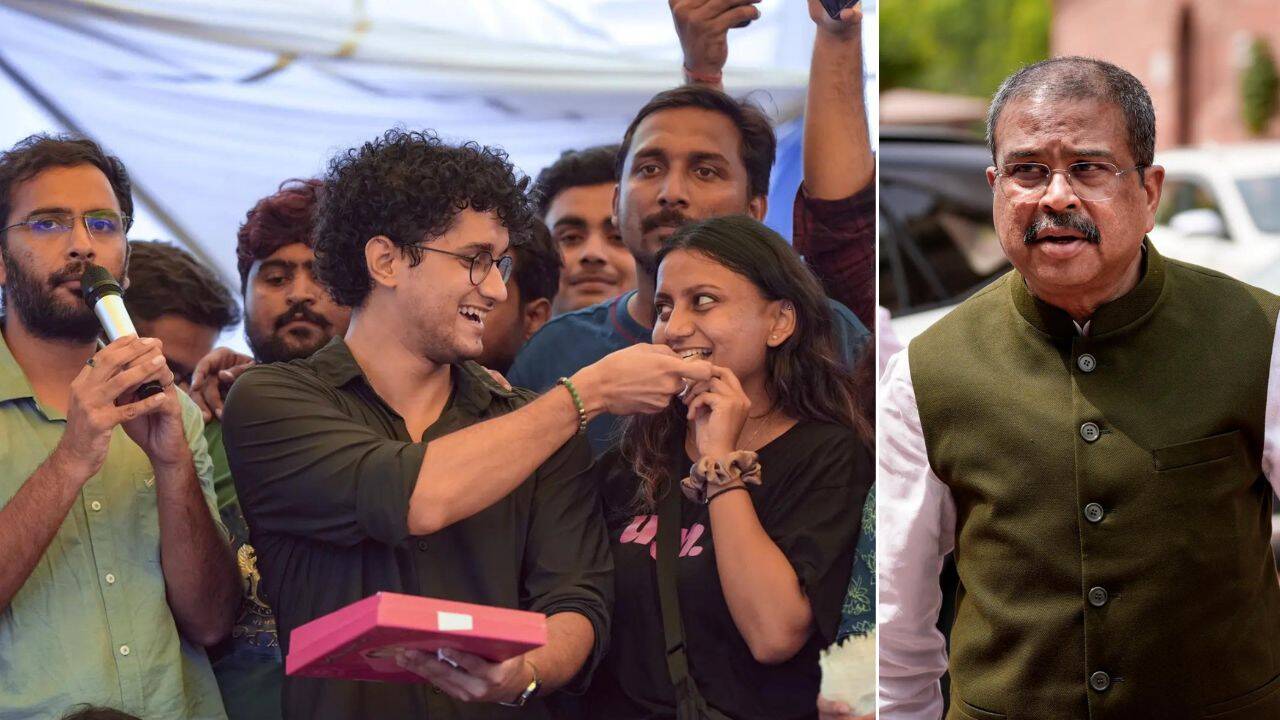
TL;DR Summary
- Union Education Minister Dharmendra Pradhan has been replaced, reportedly by Minister Joshi, amidst nationwide youth outrage over exam irregularities.
- The Coalition for Justice and Progress (CJP) has officially called off its prolonged protest at Jantar Mantar, citing significant concessions from the government.
- The Centre’s move signals a direct response to sustained student pressure for accountability and systemic reforms in the national examination framework.
In-Depth Report
Centre Heeds Youth Demands, Reshuffles Education Portfolio
In a significant development that marks a rare concession by the central government to persistent youth activism, Union Education Minister Dharmendra Pradhan has been replaced, with sources confirming Minister Joshi is set to take the helm. This crucial cabinet reshuffle comes on the heels of weeks of intense protests spearheaded by the Coalition for Justice and Progress (CJP) at Delhi’s iconic Jantar Mantar, demanding accountability and sweeping reforms in the wake of alleged paper leaks and irregularities in major national entrance examinations. The CJP, representing a broad coalition of student bodies and youth organizations, announced the cessation of their demonstration, declaring a partial victory in their fight for justice.
The decision to replace Mr. Pradhan underscores the gravity of the situation and the immense political pressure generated by the student movement. The protests, which began as localized agitations, quickly escalated into a national outcry, drawing support from various segments of society and opposition parties. Students voiced deep-seated frustration over repeated instances of examination malpractices, which they argued jeopardized their futures and eroded trust in the country’s competitive examination system. The Centre’s move is being widely interpreted as an acknowledgment of these concerns and a strategic effort to de-escalate tensions.
Addressing Exam Irregularities: A Path Forward
Key among the demands of the protesting students were a thorough, independent investigation into the alleged irregularities surrounding exams like NEET-UG and UGC-NET, stringent punishment for those involved in paper leaks, and fundamental reforms within the National Testing Agency (NTA). While specific details of the concessions granted by the government are still emerging, preliminary reports indicate commitments to a high-level committee for NTA oversight, a fast-tracked judicial inquiry into the recent controversies, and a review of existing examination protocols to prevent future breaches. The appointment of Minister Joshi is seen as an attempt to bring fresh leadership and renewed focus to this critical portfolio.
The CJP, in its announcement, highlighted that while not all demands were met entirely, the government’s willingness to engage and initiate action on several fronts constituted a significant step forward. “We came to Jantar Mantar seeking justice and accountability. While the journey is long, the Centre’s decision to listen and act, particularly with the change in leadership at the Education Ministry, is a testament to the power of collective youth voice,” stated a spokesperson for the CJP during a press conference. The coming weeks will be crucial in observing the implementation of these promised reforms and the new minister’s approach to the challenges ahead.
Background & Context
The current wave of youth anger is not an isolated incident but the culmination of recurring issues within India’s highly competitive examination system. Over the past few years, allegations of paper leaks, administrative lapses, and corrupt practices have plagued several crucial entrance and recruitment examinations conducted by various agencies, including the National Testing Agency (NTA). These incidents have repeatedly undermined the credibility of the selection process, leaving millions of aspiring students disheartened and disillusioned.
The immediate trigger for the recent protests was the controversy surrounding the NEET-UG and UGC-NET examinations. Allegations of grace marks irregularities in NEET-UG and the subsequent cancellation of UGC-NET due to a paper leak ignited a nationwide firestorm. Students, many of whom dedicate years to preparation, felt betrayed by a system they perceived as fundamentally broken and unfair. This frustration coalesced into organized protests, with groups like the CJP mobilizing students from across the country to converge at Jantar Mantar, the traditional hub for public demonstrations in the capital, demanding swift and decisive government intervention.
Why It Matters (Impact Analysis)
The Centre’s decision to replace the Education Minister and respond to the demands of protesting youth carries significant implications across political, social, and administrative spheres. Politically, it signals a rare instance where public pressure, particularly from the youth demographic, has directly influenced cabinet-level changes. This could empower future student movements and force governments to be more responsive to youth concerns, especially on issues pertaining to education and employment. It also highlights the growing sensitivity of the ruling dispensation to public sentiment, particularly after a closely contested general election.
Societally, this development offers a glimmer of hope for millions of students and their families who invest heavily in competitive examinations. If implemented effectively, the promised reforms could restore much-needed faith in the fairness and transparency of the examination system, alleviating widespread anxiety and distrust. Administratively, the incident puts the National Testing Agency (NTA) and other examination bodies under intense scrutiny. It necessitates a thorough overhaul of their operational procedures, security protocols, and accountability mechanisms, potentially leading to more robust and leak-proof examination processes in the future, thus impacting the entire edifice of national skill assessment.
Key Takeaways
- The swift leadership change in the Education Ministry underscores the government’s acknowledgment of youth power and the critical need to address systemic failures in national examinations.
- Future efforts will focus on implementing comprehensive reforms within the NTA and other testing bodies to rebuild trust, ensuring greater transparency and security for upcoming competitive exams.