Union Minister Pradhan Resigns Amidst Ladakh Stalemate; Government Reassesses Strategy After Failed Dialogue
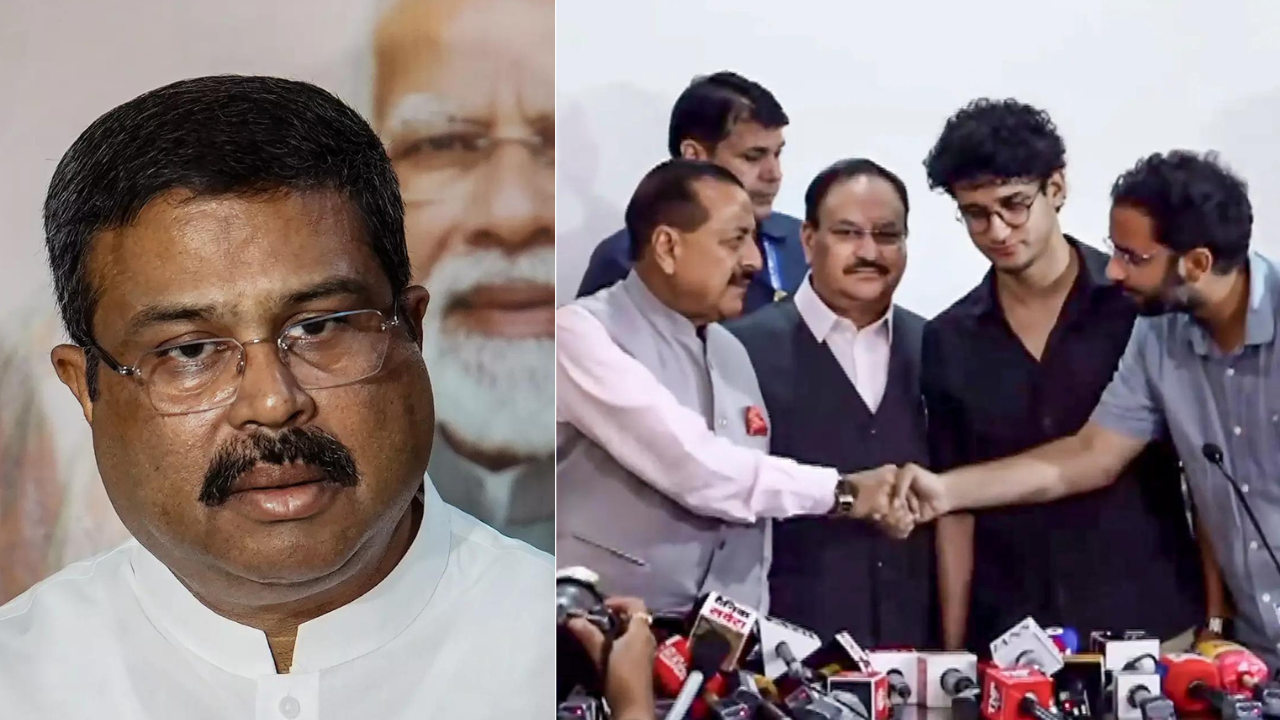
TL;DR Summary
- Union Minister Pradhan has tendered his resignation, signaling a significant governmental shift in its approach to regional governance.
- This development occurred after high-level discussions, prominently involving activist Sonam Wangchuk, failed to resolve the ongoing socio-political agitation in Ladakh.
- The government’s subsequent decision to accept the resignation indicates a strategic recalibration in response to the persistent demands and unresolved impasse in the Union Territory.
In-Depth Report
The political landscape in India has witnessed a significant shift with the resignation of Union Minister Pradhan, a move widely interpreted as the central government’s strategic recalibration following the inability to resolve protracted protests in Ladakh. The resignation, confirmed by official sources, comes at a critical juncture where dialogue, particularly involving prominent Leh-based educationist and activist Sonam Wangchuk, had not yielded the desired outcome of pacifying the agitation for special status for the Union Territory.
Reports suggest that the government opted for a strategic ‘exit call’ after the latest round of negotiations, initially hailed as a potential breakthrough, ultimately failed to bridge the chasm between the administration and protest leaders. The core demand from Ladakh’s civil society groups, including the Leh Apex Body (LAB) and Kargil Democratic Alliance (KDA), centers around the implementation of the Sixth Schedule of the Constitution, statehood for Ladakh, job reservations for locals, and the creation of separate Lok Sabha constituencies for Leh and Kargil.
Despite multiple rounds of discussions and assurances of commitment to address the concerns of the Ladakhi people, the central government and the protest representatives could not arrive at a mutually agreeable resolution. Mr. Wangchuk, who had undertaken a prolonged hunger strike to press these demands, maintained that the government’s proposals fell short of the comprehensive protections sought for Ladakh’s unique environmental and cultural identity. His steadfast stance, backed by widespread public support in the region, highlighted the deep-seated nature of the grievances.
Minister Pradhan’s departure, therefore, is not merely a personnel change but rather a signal of a broader reassessment within the government regarding its approach to complex regional issues. It underscores the administration’s acknowledgment of the persistent nature of the protests and the perceived need for a fresh strategy to address the underlying causes of the unrest in Ladakh, a strategically vital region.
The failure of the Wangchuk-led efforts to secure a resolution, coupled with the continued public demonstrations, has prompted this governmental action. Observers indicate that the resignation is a precursor to a potential overhaul of the government’s engagement strategy, aiming to break the current deadlock and foster a more conducive environment for dialogue and resolution in the sensitive border region.
Background & Context
The genesis of the current agitation in Ladakh can be traced back to August 2019, when the erstwhile state of Jammu and Kashmir was bifurcated into two Union Territories: Jammu & Kashmir, and Ladakh. While the move was initially met with mixed reactions, a significant section of Ladakh’s populace, particularly the Leh Apex Body (LAB) and the Kargil Democratic Alliance (KDA), soon began voicing strong demands for greater autonomy and constitutional safeguards. Their primary contention revolves around the absence of adequate protections for Ladakh’s distinct tribal culture, fragile ecosystem, and land rights under its current Union Territory status.
The central demand has consistently been the extension of the Sixth Schedule of the Indian Constitution to Ladakh. The Sixth Schedule provides for the administration of tribal areas in four Northeastern states, granting significant autonomy to district councils. Ladakhi leaders argue that this framework is essential to safeguard their unique identity and prevent demographic and ecological changes. Other key demands include full statehood, reservation of government jobs for locals, and the establishment of separate parliamentary constituencies for Leh and Kargil.
Over the past few months, the intensity of these protests escalated, culminating in a significant hunger strike led by Sonam Wangchuk, a renowned engineer, innovator, and education reformist. His non-violent protest garnered significant national and international attention, effectively spotlighting the concerns of the Ladakhi people. The central government engaged in several rounds of high-level talks with representatives of LAB and KDA, attempting to find common ground and de-escalate the situation. Despite optimism surrounding some of these dialogues, a definitive consensus on the core demands remained elusive, ultimately leading to the current impasse.
Why It Matters (Impact Analysis)
The resignation of Union Minister Pradhan, orchestrated as a strategic move by the government, carries significant implications for both domestic politics and the future governance of Ladakh. Firstly, it underscores the persistent challenges faced by the central government in addressing regional aspirations, particularly in strategically sensitive areas. The failure of dialogue, even with respected figures like Sonam Wangchuk, signals the deep-rooted nature of the demands for constitutional safeguards and local autonomy, which cannot be easily assuaged by minor concessions.
Secondly, this development is likely to reignite debates about the efficacy of the current administrative setup in Union Territories, especially those without a legislative assembly. The ongoing protests highlight a perceived democratic deficit and a yearning for greater local representation and control over land, resources, and cultural identity. The government’s decision to recalibrate its strategy suggests an acknowledgment that the existing approach has been insufficient, potentially paving the way for a more comprehensive review of governance models in such regions.
Finally, the incident could have broader political ramifications, influencing the government’s handling of similar demands from other regions with unique ethnic, cultural, or geographical characteristics. It sets a precedent where sustained and determined civil society action can compel a strategic reassessment at the highest levels of government. For Ladakh, the immediate future remains uncertain, with a renewed focus on what the government’s ‘reassessed strategy’ will entail, and whether it can finally forge a path towards sustainable resolution and long-term stability in the pristine yet politically charged high-altitude region.
Key Takeaways
- The government’s decision to accept Minister Pradhan’s resignation signifies a major strategic shift in its approach to resolving the protracted Ladakh protests.
- The failure of high-level talks, even after the intervention of respected figures like Sonam Wangchuk, underscores the profound and unyielding nature of the demands for constitutional safeguards under the Sixth Schedule for Ladakh.