Union Minister Pralhad Joshi Takes Charge of Education Ministry, Declares 'This is a New Subject for Me'
TL;DR Summary
- Pralhad Joshi has officially assumed the role of Union Minister of Education, transitioning from his previous portfolios.
- Upon taking charge, Mr. Joshi candidly stated that the education sector represents “a new subject” for him.
- This declaration places immediate focus on his approach to understanding and leading the nation’s critical educational reforms and policies.
In-Depth Report
Union Minister Pralhad Joshi Assumes Education Portfolio
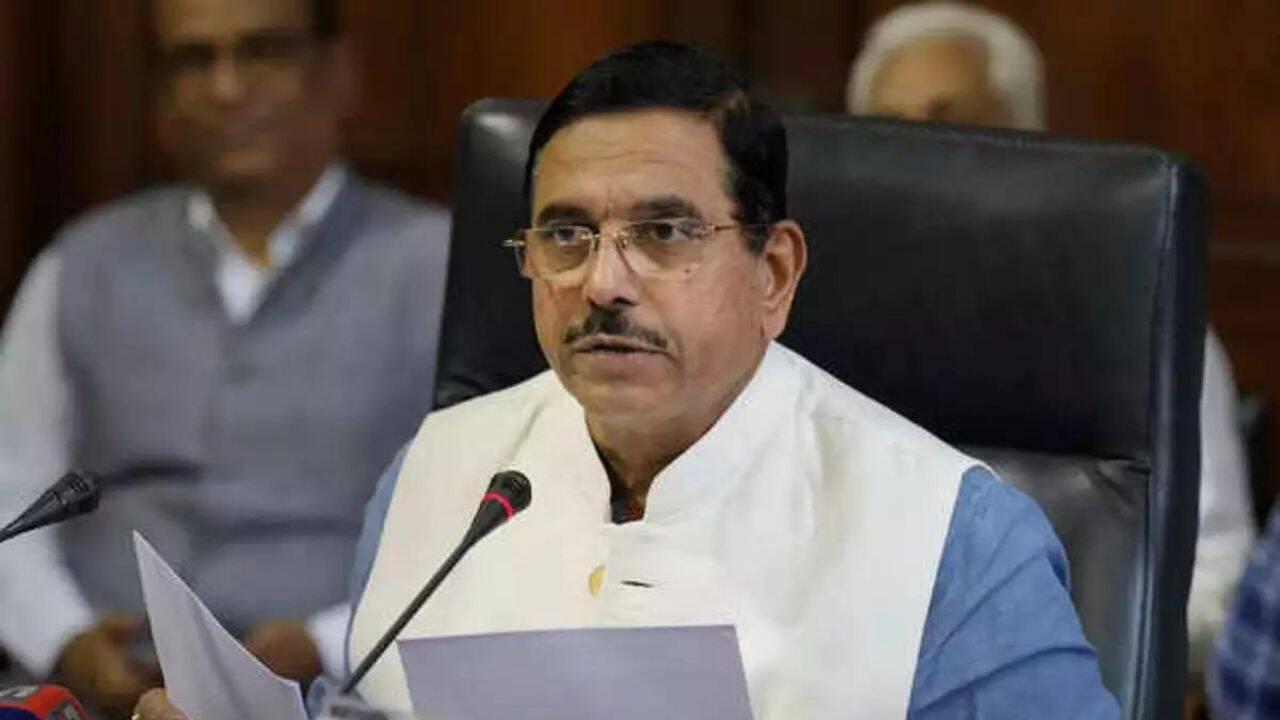
Pralhad Joshi, a prominent figure within the Union Cabinet, has formally taken charge as the Minister of Education. Following the portfolio allocation in the recent government formation, Mr. Joshi articulated his perspective on the new role, stating, “This is a new subject for me.” This declaration has garnered significant attention, particularly given the critical importance of the education sector in national development and policy discourse. Previously holding portfolios such as Coal and Mines, and Parliamentary Affairs, Mr. Joshi’s transition to the education ministry marks a substantial shift in his governmental responsibilities.
The statement, while seemingly straightforward, carries various interpretations within political and educational circles. It could be construed as an expression of humility, acknowledging the complex and multifaceted nature of India’s educational landscape. Alternatively, it might signal an intent to approach the ministry with a fresh perspective, free from preconceived notions, and an openness to learn from stakeholders. Such an approach could potentially foster collaborative policy-making and innovative solutions for the myriad challenges confronting the sector.
The Ministry of Education oversees a vast and intricate system, encompassing everything from primary schooling to higher education, vocational training, and cutting-edge research. Key challenges include the ongoing implementation of the transformative National Education Policy (NEP) 2020, addressing persistent disparities in access and quality, integrating technology into learning frameworks, and ensuring the employability of graduates in a rapidly evolving job market. The minister’s acknowledged unfamiliarity with the specifics of the sector places an immediate emphasis on rapid assimilation of information and intensive engagement with domain experts.
Mr. Joshi’s prior experience in parliamentary affairs, as well as managing the strategic sectors of coal and mines, demonstrates his administrative capabilities and acumen in overseeing complex governmental operations. While these sectors differ considerably from education, his experience in policy formulation, inter-ministerial coordination, and parliamentary processes could prove valuable. The immediate challenge will lie in adapting these established skills to the unique requirements and sensitivities of the education ecosystem, which demands deep sectoral understanding and a nuanced, empathetic approach.
Stakeholders across the education spectrum—academicians, teachers, students, parents, and industry leaders—will keenly observe Mr. Joshi’s initial steps. His ability to quickly grasp the nuances of the education portfolio and articulate a clear, actionable vision will be crucial in setting the tone for the ministry’s direction. The focus will be on how he leverages expertise within the ministry and among external advisors to navigate the path forward for India’s ambitious educational reforms and ensure continuity of progress.
Background & Context
The Ministry of Education, formerly known as the Ministry of Human Resource Development (MHRD), was renamed in 2020, coinciding with the launch of the landmark National Education Policy (NEP) 2020. This comprehensive policy aims to bring transformative changes across all levels of education, from early childhood care to higher education, with a foundational focus on holistic development, flexibility, and multidisciplinary learning. The effective and timely implementation of NEP 2020 remains a primary agenda for the ministry, requiring sustained effort and strategic, informed leadership to achieve its far-reaching objectives.
Mr. Joshi succeeds Dharmendra Pradhan, who held the portfolio for a significant period and oversaw crucial aspects of NEP implementation, skill development initiatives, and the integration of vocational training into mainstream education. Prior to Mr. Pradhan, Ramesh Pokhriyal Nishank also served as the Education Minister, navigating the unprecedented challenges posed by the COVID-19 pandemic and initiating several digital learning programs to ensure continuity of education. Each minister has contributed to the ongoing evolution of India’s educational framework, grappling with issues ranging from the digital divide and equitable access to curriculum reforms and quality enhancement.
Ministerial appointments and portfolio allocations are standard practices in parliamentary democracies, often reflecting the government’s evolving priorities, political exigencies, and the strategic deployment of its experienced members to key sectors. Such transitions, while invariably presenting new learning curves for individual ministers, are also viewed as opportunities for introducing fresh perspectives and providing renewed impetus in specific sectors. The Prime Minister’s decision to assign Mr. Joshi this critical portfolio underscores the government’s continued emphasis on educational reform and comprehensive human resource development as central pillars of national progress.
Why It Matters (Impact Analysis)
The appointment of a new Education Minister directly impacts the pace, direction, and efficacy of national educational policy implementation, particularly concerning the ambitious NEP 2020. Any delay in understanding the policy’s intricate framework or a perceived lack of immediate vision could potentially slow down critical reforms, affecting millions of students, educators, and institutions across the country. Robust and informed leadership is essential to ensure that the policy’s objectives—such as universal foundational literacy and numeracy, skill integration, and the internationalization of higher education—are met effectively and equitably.
The public, particularly parents, students, and educators, places immense faith and expectation in the education system. A minister who openly states unfamiliarity with the portfolio could evoke mixed reactions. While some might appreciate the honesty and the potential for a fresh, unbiased approach, others might seek immediate reassurance regarding the minister’s capacity to competently lead such a vital and complex sector without prior direct experience. Building trust and demonstrating a rapid grasp of the core issues and stakeholder concerns will be paramount for Mr. Joshi to inspire confidence among all segments of the educational ecosystem.
Education is intrinsically linked to human capital development, economic growth, and social mobility. Effective and visionary leadership in this ministry can catalyze innovation, foster cutting-edge research, and produce a skilled and adaptable workforce, thereby contributing significantly to India’s demographic dividend and global competitiveness. Conversely, any missteps or prolonged periods of policy stagnation or uncertainty could have long-term adverse effects on India’s global standing, its innovation capacity, and its ability to fully harness its vast youth potential. The quality and accessibility of educational outcomes directly influence the nation’s future trajectory and socio-economic progress.
Key Takeaways
- Pralhad Joshi’s acknowledged newness to the education portfolio underscores the immediate challenge of rapid assimilation and strategic engagement required for effective leadership in a sector critical to national development.
- Stakeholders will keenly observe his initial actions and articulate a clear vision for advancing national educational reforms, particularly the comprehensive implementation of NEP 2020, to ensure continuity and accelerated progress.