Jantar Mantar Walls Cleansed, Yet NEET Protestors' Demands Persist Following Ministerial Engagement
TL;DR Summary
- The physical remnants of the recent NEET-UG protest at Jantar Mantar have been systematically removed, leaving the site visually clean.
- Despite the official clean-up and pronouncements from Education Minister Dharmendra Pradhan, the core grievances of the protesting students concerning examination irregularities remain unresolved.
- The situation underscores a deep-seated demand for accountability and reform within the national examination system, maintaining pressure on educational authorities.
In-Depth Report
Jantar Mantar: A Cleansed Canvas, A Lingering Message
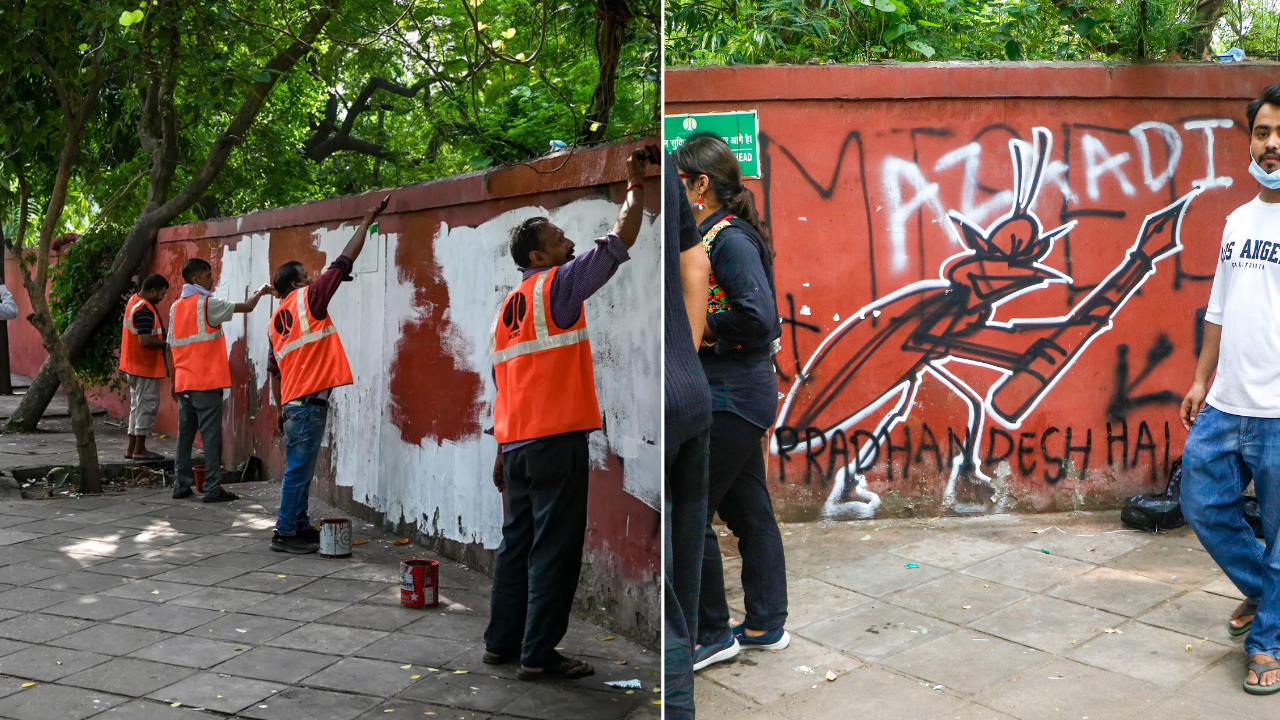
NEW DELHI – The walls surrounding Jantar Mantar, a traditional hub for public demonstrations in the national capital, now bear no physical trace of the recent intense protests by students aggrieved over alleged irregularities in the NEET-UG 2024 examination. Graffiti articulating demands for re-examination, a Central Bureau of Investigation (CBI) probe, and justice for students, which had covered the venerable monument’s periphery, has been meticulously wiped clean. This extensive clean-up operation, observed in the days following heightened student activity and official responses, presents a sterile facade where once vibrant expressions of discontent resonated.
The Contrast of Physical Eradication and Enduring Sentiment
However, the physical obliteration of these protest markers does not, by all accounts, signify the dissolution of the underlying issues or the protestors’ resolve. The sentiment driving the demonstrations — a profound distrust in the examination process and the National Testing Agency (NTA), coupled with widespread anxiety over students’ futures — continues to simmer. The removal of the graffiti merely highlights a contrast between the administrative effort to restore normalcy to public spaces and the persistent, unaddressed concerns of a significant segment of the student population.
Minister Pradhan’s Engagement and Subsequent Developments
Education Minister Dharmendra Pradhan had engaged with the unfolding crisis, acknowledging systemic failures and promising reforms and accountability. His statements included assurances of a high-level committee to review the NTA’s functioning and punitive action against those responsible for alleged paper leaks. While these pronouncements aimed to assuage anxieties, the “exit” of the Minister from the immediate media spotlight regarding these daily protests and the subsequent clean-up have not yet translated into a perceived resolution for many students, who continue to advocate for more fundamental changes, including a complete re-test.
Unwavering Demand for Justice
Student organisations and affected individuals maintain that the fundamental problems, such as alleged paper leaks and the controversial grace marks awarded, are systemic and require comprehensive intervention. The cleaned walls of Jantar Mantar, therefore, serve as a potent metaphor: while the visible signs of dissent may be removed, the core message of dissatisfaction and the demand for genuine justice for lakhs of aspiring medical professionals remain deeply etched in the national discourse. The focus now shifts to the tangible actions and reforms that will follow the official acknowledgment of the crisis.
Background & Context
Genesis of the NEET-UG 2024 Controversy
The NEET-UG 2024 examination, conducted on May 5, quickly became mired in controversy following allegations of widespread paper leaks and irregularities. Initial concerns emerged from Bihar, where police investigations uncovered evidence of an organised syndicate involved in leaking examination papers for monetary gain. Simultaneously, an unprecedented number of students scoring perfect marks (720/720) and the awarding of grace marks to over 1,500 candidates further fueled suspicions of malpractices and a lack of transparency in the evaluation process.
The Role of the National Testing Agency (NTA) and Supreme Court Intervention
The National Testing Agency (NTA), responsible for conducting the examination, initially defended its procedures but subsequently faced intense scrutiny from various quarters, including the Supreme Court of India. Numerous petitions were filed challenging the examination results, seeking a re-examination, and demanding a thorough investigation into the alleged irregularities. The Supreme Court, while refusing to halt the counselling process entirely, acknowledged the gravity of the allegations and stressed the need for fairness and transparency, prompting the NTA to withdraw grace marks for affected candidates and offer an option for re-examination.
Escalation to National Protests
The cumulative effect of these revelations led to widespread student protests across the country, with Jantar Mantar in New Delhi becoming a focal point. Thousands of students, parents, and student organisations converged to demand a comprehensive re-evaluation of the examination, a CBI probe into the alleged leaks, and greater accountability from the NTA and the Ministry of Education. This collective outcry highlighted a significant erosion of public trust in the integrity of national competitive examinations.
Why It Matters (Impact Analysis)
Erosion of Trust in National Examination Systems
The NEET-UG 2024 controversy has severely eroded public trust in the sanctity and fairness of India’s national examination systems, particularly the NTA. For millions of students who invest years in rigorous preparation, the perception of compromised integrity undermines their faith in meritocracy and equitable opportunity. This has profound implications for the credibility of other high-stakes examinations conducted by various governmental agencies, potentially fostering cynicism among the youth regarding fair play in competitive spheres.
Implications for Educational Governance and Student Futures
The ongoing protests and the government’s response will shape future policies regarding educational governance and the conduct of national examinations. A failure to address the systemic issues comprehensively could lead to persistent discontent and further agitation, destabilizing the academic calendar and student morale. Moreover, the uncertainty surrounding the NEET-UG 2024 results directly impacts the career trajectories of lakhs of aspiring medical professionals, causing immense psychological distress and potentially delaying their entry into higher education.
Economic and Social Repercussions
Beyond the immediate educational sphere, the crisis carries economic and social repercussions. Families invest substantial financial resources in coaching and preparation for competitive exams. Allegations of paper leaks and an opaque system represent a significant financial loss and emotional toll on these families. Socially, the perception of an unfair system can exacerbate existing inequalities, as students from less privileged backgrounds may feel disproportionately disadvantaged, potentially widening the socio-economic divide and fueling broader calls for systemic reform.
Key Takeaways
- The incident underscores an urgent need for robust reforms within the National Testing Agency and other examination bodies to restore public confidence in the integrity and transparency of India’s competitive examination system.
- The continued student activism, even after physical protest sites are cleared, signals that deep-seated grievances regarding educational fairness require sustained governmental attention and comprehensive, transparent solutions beyond immediate crisis management.