Jaishankar Meets Rubio: India Flags Russia, US Frien...
TL;DR Summary
- External Affairs Minister S. Jaishankar engaged in critical discussions with US Senator Marco Rubio regarding bilateral and global issues.
- India formally conveyed its concerns regarding the potential secondary impacts of US sanctions imposed on Russia.
- Senator Rubio reaffirmed the United States’ commitment to its strategic partnership with India, emphasizing shared interests.
In-Depth Report
Diplomatic Engagement in Washington
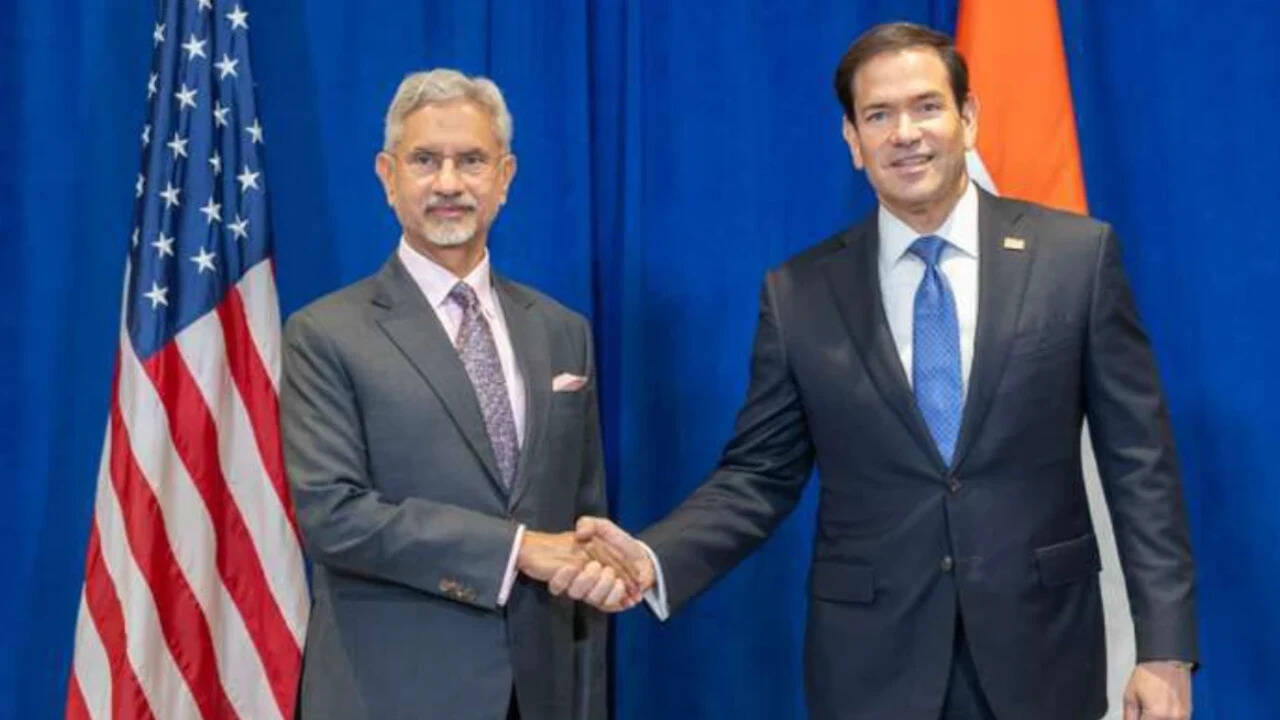
External Affairs Minister Dr. S. Jaishankar recently held a significant meeting with US Senator Marco Rubio in Washington D.C., where a range of bilateral and global issues were deliberated. The high-level interaction underscored the depth and complexity of the strategic partnership between India and the United States, touching upon critical geopolitical dynamics. Both leaders engaged in a candid exchange of views, reflecting the importance of continued dialogue in navigating an evolving international landscape.
India’s Stance on Russia Sanctions
During the discussions, Minister Jaishankar articulated India’s perspective and concerns regarding the extensive sanctions imposed by the United States and its allies on Russia following the conflict in Ukraine. India specifically flagged potential secondary effects of these sanctions that could impact its diverse interests, particularly in sectors such as energy procurement, defense cooperation, and economic stability. While India has maintained a neutral stance on the Ukraine conflict, its strategic autonomy necessitates careful consideration of global economic repercussions.
US Reaffirms Strategic Partnership
Senator Rubio, a prominent voice in US foreign policy, reciprocated the discussions by emphasizing the enduring strength and importance of the US-India strategic partnership. He underscored the shared democratic values and converging interests of both nations, particularly in maintaining stability and a free and open Indo-Pacific region. The Senator’s remarks aimed to reassure India of the United States’ commitment to fostering robust ties, despite any differing approaches on specific geopolitical challenges.
Broader Geopolitical Context
The meeting also encompassed broader discussions on regional security, counter-terrorism efforts, and collaboration within multilateral frameworks such as the Quad. Both sides acknowledged the need for concerted efforts to address global challenges, from climate change to supply chain resilience. The constructive nature of the dialogue highlighted the ongoing efforts by both countries to align their foreign policy objectives and strengthen their strategic alignment in a multipolar world.
Background & Context
The United States imposed severe economic sanctions on Russia following its invasion of Ukraine in February 2022, targeting key sectors like finance, energy, and defense. These measures, including restrictions on transactions with major Russian entities and individuals, aim to cripple Russia’s economy and military capabilities. India, historically a major defense and energy partner of Russia, has found itself in a delicate balancing act, reliant on Russian military hardware and seeking affordable energy imports, even as it strengthens ties with the West, particularly the US.
The robust Indo-US strategic partnership has expanded significantly over the past two decades, driven by shared concerns about regional security, economic cooperation, and democratic values. This includes increased defense trade, joint military exercises, and cooperation in technology and space. However, India’s continued procurement of Russian S-400 missile defense systems, despite potential CAATSA (Countering America’s Adversaries Through Sanctions Act) implications, underscores the complexities and sometimes divergent national interests that underpin the relationship, necessitating ongoing diplomatic engagement to manage expectations and resolve potential friction points.
Why It Matters (Impact Analysis)
This high-level interaction is crucial as it signifies India’s proactive diplomacy in articulating its national interests amidst global geopolitical shifts. The explicit flagging of concerns regarding Russia sanctions indicates India’s determination to safeguard its economic and security requirements, without necessarily aligning entirely with either side of major power blocs. For the public, this demonstrates India’s commitment to strategic autonomy, ensuring that foreign policy decisions primarily serve its domestic developmental and security objectives, even when navigating complex international pressures.
From an economic perspective, the potential for secondary sanctions to impact India’s financial institutions or trade relationships could have significant ramifications for various industries, including defense manufacturing, energy security, and export-import businesses. The US affirmation of friendship, conversely, provides a necessary reassurance, reinforcing investor confidence in the long-term trajectory of the Indo-US economic partnership. This diplomatic dialogue thus plays a pivotal role in shaping policy decisions that directly influence trade flows, investment opportunities, and the overall stability of India’s external economic engagements.
Key Takeaways
- India continues to prioritize its strategic autonomy and diverse national interests while engaging with global powers.
- The US-India partnership is resilient and evolving, requiring continuous high-level dialogue to manage complex geopolitical challenges.
🔥 Recent Breaking News
- Pezeshkian Slams Trump: 'Terrorist' or 'Victim' Debate? (Sep 23, 2026)
- पेझेशकियान UNGAत ट्रम्पना भिडले: 'दहशतवादी' की 'बळी'? (Sep 23, 2026)
- Pezeshkian Slams Trump: 'Terrorist' or 'Victim' Debate? (Sep 23, 2026)
- पेझेशकियान UNGAत ट्रम्पना भिडले: 'दहशतवादी' की 'बळी'? (Sep 23, 2026)
- SC SLAMS CRITICS: 'Judiciary Playing Second Fiddle t... (Sep 23, 2026)