Akhilesh's Rajya Sabha Picks: Strategy or PDA Paradox?
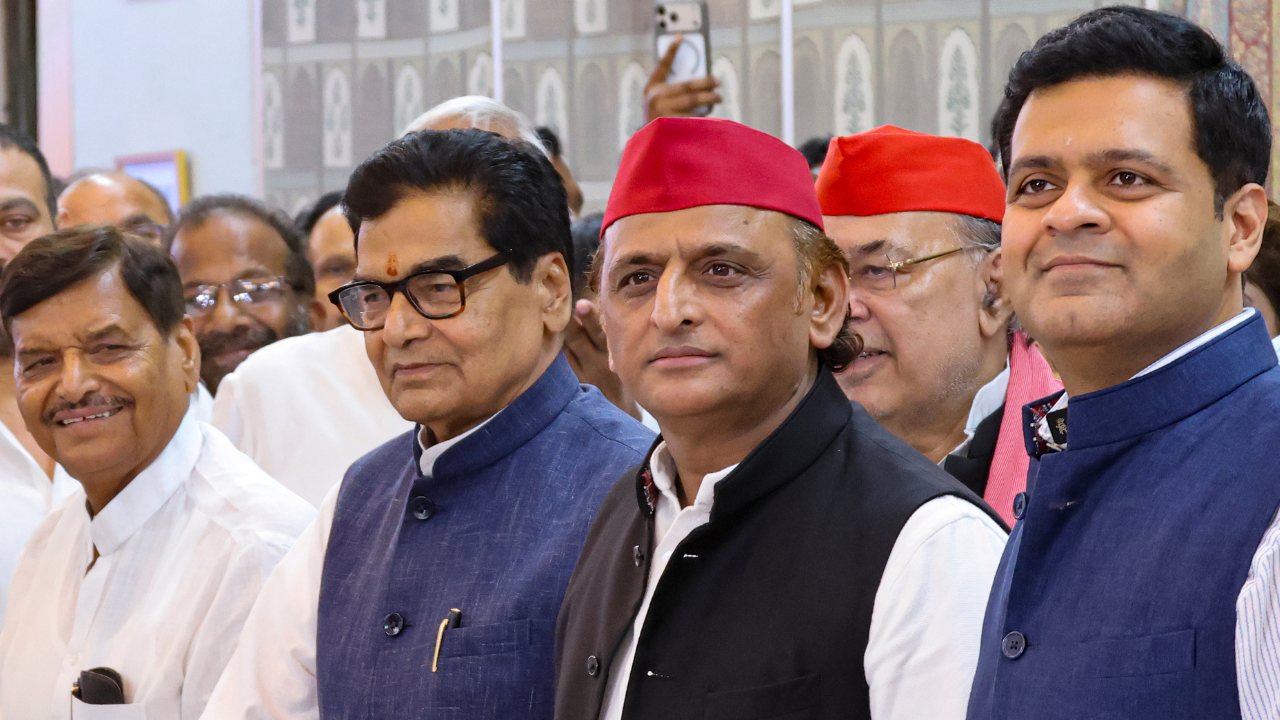
TL;DR Summary
- The Samajwadi Party recently announced its candidates for the upcoming Rajya Sabha elections from Uttar Pradesh.
- The selections have ignited a significant debate regarding their alignment with the party’s “PDA” (Pichhde, Dalit, Alpsankhyak) social justice plank.
- Political analysts are scrutinizing whether these choices represent a pragmatic strategic maneuver or a potential contradiction of the party’s stated core principles.
In-Depth Report
Samajwadi Party’s Rajya Sabha Nominees Unveiled
The Samajwadi Party (SP) recently unveiled its slate of candidates for the Rajya Sabha elections, sparking considerable discussion across the political landscape of Uttar Pradesh. With the party having sufficient numbers in the state assembly to secure at least two seats, and potentially a third with support from allies, the nominations for the upper house of Parliament were keenly awaited. The list includes prominent figures whose selection has immediately drawn attention, particularly in the context of the SP’s avowed commitment to its “PDA” (Pichhde - backward classes, Dalit - scheduled castes, Alpsankhyak - minorities) social justice alliance.
Scrutiny Over “PDA” Alignment
A significant point of contention has arisen from the specific profiles of the nominated candidates. While some selections align with the PDA narrative, others, such as a prominent industrialist or individuals from forward castes, have led to questions regarding the party’s fidelity to its proclaimed social justice framework. Critics argue that these choices appear to deviate from a strict adherence to the PDA formula, which seeks to prioritize representation for marginalized communities. This perceived incongruity has fueled speculation about the underlying motivations behind the nominations.
Political Reactions and Party Rationale
The nominations have elicited strong reactions from opposition parties, who have been quick to highlight what they term a “contradiction” in the SP’s approach. They accuse the party of hypocrisy, suggesting a divergence between its public rhetoric and its actions in candidate selection. The Bharatiya Janata Party (BJP), in particular, has seized upon the opportunity to challenge the SP’s commitment to social justice. In response, Samajwadi Party leaders have largely defended the selections as a pragmatic and inclusive strategy aimed at broadening the party’s appeal and strengthening its presence across various societal segments, emphasizing experience and capability as key criteria alongside social representation.
Background & Context
The Rajya Sabha, as the Council of States, plays a crucial role in India’s legislative process, and its composition is often a reflection of the political balance in state assemblies. For regional parties like the Samajwadi Party, securing seats in the Upper House is vital for asserting their national presence and influencing policy debates. The SP’s current strength in the Uttar Pradesh Legislative Assembly allows it to nominate candidates confidently, making each selection a significant political statement ahead of the upcoming general elections.
Akhilesh Yadav’s “PDA” slogan emerged as a cornerstone of the Samajwadi Party’s electoral strategy, particularly after the 2017 and 2022 assembly elections where the party sought to consolidate a robust support base among backward classes, Dalits, and minorities. This framework was designed to counter the BJP’s broader Hindutva appeal and to re-establish the SP as the primary advocate for social justice in Uttar Pradesh. The “PDA” strategy has been consistently articulated in party speeches and manifestos, aiming to forge a powerful electoral coalition that transcends traditional caste divisions within these groups.
Previous Rajya Sabha nominations by the Samajwadi Party have often attempted to balance caste and community representation with political expediency. However, the specific political climate preceding the 2024 Lok Sabha elections, coupled with the explicit and consistent reiteration of the “PDA” narrative, places an intensified spotlight on the current choices. The party’s ability to demonstrate a clear commitment to its stated principles through its nominations is seen as a critical test of its ideological consistency and its leadership’s vision.
Why It Matters (Impact Analysis)
The controversy surrounding Akhilesh Yadav’s Rajya Sabha picks carries significant implications for the Samajwadi Party’s political future, particularly in the lead-up to the 2024 Lok Sabha elections. A perceived contradiction between the party’s “PDA” rhetoric and its nomination choices could erode trust among its core voter base of backward classes, Dalits, and minorities, who might feel their representation has been overlooked. This could weaken the party’s narrative of social justice and make it more challenging to mobilize these crucial segments, potentially impacting its electoral performance across Uttar Pradesh.
Furthermore, the selections could have wider ramifications for the opposition alliance, particularly the INDIA bloc. Any internal dissent or public criticism regarding the SP’s choices could provide fodder for the ruling BJP, allowing it to paint the opposition as ideologically inconsistent or self-serving. This could create friction among alliance partners who might feel that such decisions undermine the collective effort to present a united and credible alternative to the incumbent government, thus complicating seat-sharing talks and collaborative campaigning efforts.
Ultimately, these nominations underscore the complex balancing act faced by political parties in India. They must navigate between ideological commitments, the imperative of broad-based political appeal, and pragmatic considerations for national representation. The message conveyed by these choices will not only influence the SP’s standing within Uttar Pradesh but also contribute to the broader discourse on caste-based politics, social representation, and the credibility of political promises in the national arena.
Key Takeaways
- The Samajwadi Party’s future electoral success is intricately linked to how effectively it can reconcile the current Rajya Sabha nominations with its foundational “PDA” social justice narrative.
- These nominations highlight the inherent tension political parties face in balancing ideological commitments with pragmatic electoral strategies and the need for diverse representation across various segments of society.
🔥 Recent Breaking News
- (Oct 03, 2026)
- SHOCKER: New UP Congress Chief Aradhana Misra Vows S... (Oct 03, 2026)
- 'सपसोबत आघाडी मजबूत करणार!': यूपी काँग्रेस अध्यक्षां... (Oct 03, 2026)
- आराधना मिश्रा का बड़ा बयान: सपा से गठबंधन मज़बूत होगा! (Oct 03, 2026)
- SHOCKER: New UP Congress Chief Aradhana Misra Vows S... (Oct 03, 2026)