AI & Monk: Anthropic's Bold Bid to Tame Claude
TL;DR Summary
- Anthropic is collaborating with spiritual scholars and philosophers to enhance the safety and ethical alignment of its Claude AI.
- This innovative initiative seeks to integrate diverse wisdom traditions into advanced artificial intelligence development.
- The program aims to mitigate potential risks associated with powerful AI models by fostering a human-centric ethical framework.
In-Depth Report
Anthropic’s Novel Approach to AI Alignment
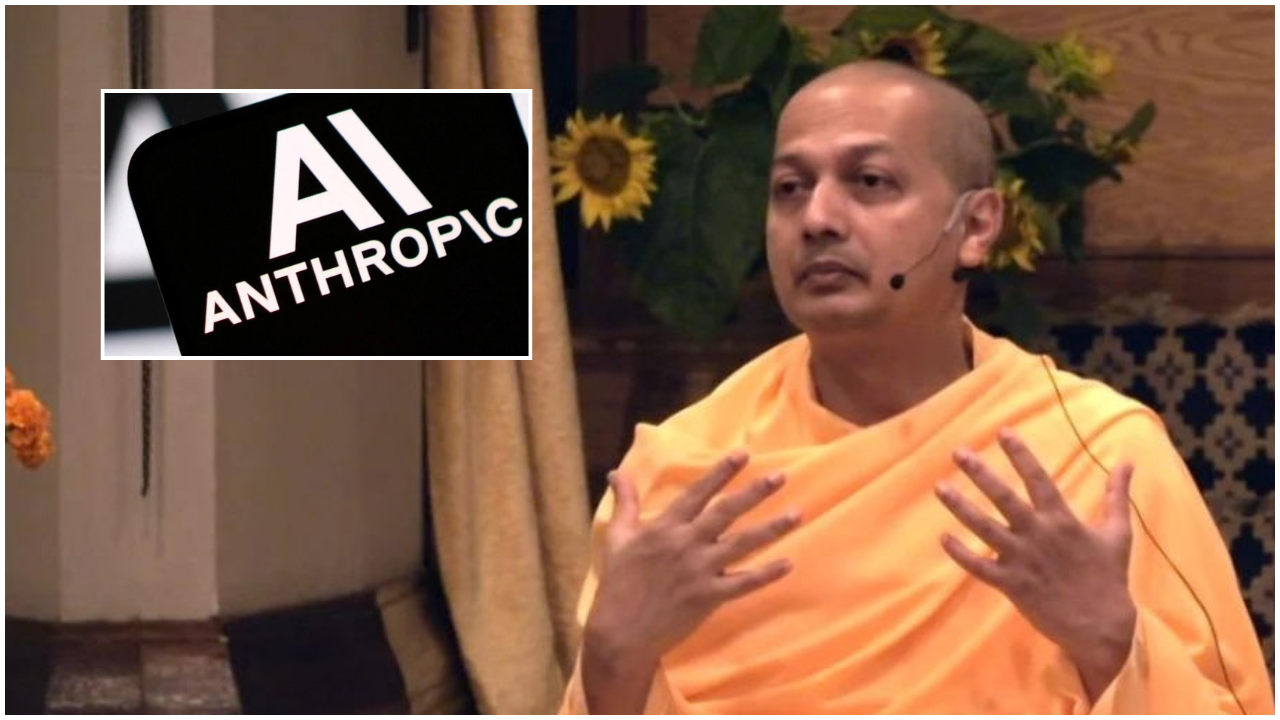
In a significant development that underscores the evolving landscape of artificial intelligence ethics, Anthropic, a leading AI research company, has embarked on a unique collaboration involving spiritual leaders and philosophers. This initiative, colloquially termed “AI and the monk,” seeks to imbue its advanced large language model, Claude, with a deeper understanding of human values, ethics, and safety by consulting with individuals possessing profound insights into wisdom traditions and moral philosophy. The move reflects a growing recognition within the AI community that purely technical solutions may be insufficient for achieving robust AI alignment.
Collaborative Framework for Ethical AI
The program involves engaging swamis, contemplative practitioners, and academic philosophers from various traditions to provide critical feedback and guidance on Claude’s development. These experts are tasked with evaluating Claude’s responses to complex ethical dilemmas, scrutinizing its underlying reasoning, and identifying potential biases or misalignments with human values. The goal is not merely to filter undesirable outputs but to fundamentally shape the AI’s “constitutional principles,” moving towards a model that inherently understands and prioritizes human well-being and moral reasoning. This interdisciplinary approach aims to transcend conventional datasets by incorporating centuries of human ethical thought.
Integrating Diverse Wisdom Traditions
Anthropic’s decision to consult spiritual and philosophical authorities highlights a proactive effort to address the multifaceted challenges of AI safety. By drawing upon a broader spectrum of human experience and wisdom, the company aims to create AI systems that are more robust, trustworthy, and beneficial to society. This collaborative model positions the development of advanced AI not just as an engineering problem but as a deeply humanistic endeavor, requiring input from diverse perspectives that have long contemplated questions of consciousness, ethics, and existence.
Beyond Technical Guardrails
This innovative strategy is a deliberate step beyond conventional technical guardrails, which often rely on statistical filtering or rule-based systems. Instead, Anthropic is exploring how qualitative human judgment, particularly from those versed in complex ethical reasoning, can directly inform the training and fine-tuning processes of its AI. The expectation is that integrating such profound human insights will foster an AI that is not only powerful but also profoundly aligned with humanity’s highest aspirations.
Background & Context
The Challenge of AI Alignment
The rapid advancements in artificial intelligence, particularly with large language models (LLMs) like Claude, have brought forth unprecedented capabilities alongside significant ethical and safety concerns. The “AI alignment problem” refers to the challenge of ensuring that AI systems act in accordance with human intentions, values, and ethical principles, especially as these systems become more autonomous and powerful. Historically, this problem has largely been approached through technical means, focusing on interpretability, robustness, and control mechanisms. However, the complexity of human values often eludes purely computational representations.
Anthropic’s Constitutional AI
Anthropic was founded by former OpenAI researchers specifically with a mission to build safe and beneficial AI. A cornerstone of its approach has been “Constitutional AI,” a method that trains an AI system to evaluate and revise its own responses based on a set of guiding principles or a “constitution.” This constitution is typically derived from human-written rules and ethical frameworks. While an improvement over direct human feedback (which can be slow and prone to bias), the quality and comprehensiveness of the constitution itself remain critical. This new “AI and the monk” initiative can be seen as an evolution of Constitutional AI, seeking to enrich these foundational principles with deeper, more nuanced ethical insights.
Evolving Perspectives on AI Safety
The involvement of spiritual and philosophical leaders marks a significant shift in the broader AI safety discourse. Initially dominated by computer scientists and engineers, the field is increasingly recognizing the need for interdisciplinary collaboration. Experts from philosophy, sociology, psychology, and now even spiritual traditions are being called upon to contribute to understanding and shaping the future of AI. This reflects a growing consensus that AI safety is not merely a technical problem but a societal one, requiring a holistic approach that incorporates diverse perspectives on human flourishing and ethical conduct.
Why It Matters (Impact Analysis)
Setting a Precedent for Interdisciplinary AI Development
Anthropic’s “AI and the monk” initiative could establish a crucial precedent for future AI development, advocating for a deeply interdisciplinary and human-centric approach. By demonstrating the tangible value of integrating wisdom traditions and philosophical thought into core AI design, it challenges the conventional, often siloed, technological development paradigm. This could inspire other leading AI labs to broaden their engagement with humanities and social sciences, fostering a more holistic and responsible innovation ecosystem.
Fostering More Trustworthy AI Systems
The success of this collaboration has the potential to yield AI systems that are not only powerful but also more profoundly aligned with human ethics and values. Such systems could garner greater public trust, which is vital for the widespread and beneficial adoption of AI technologies across various sectors, from healthcare to education. An AI perceived as ethically grounded could mitigate public anxieties surrounding the technology’s potential for misuse or unintended negative consequences, paving the way for more confident integration into daily life and critical infrastructure.
Broad Societal and Ethical Implications
Beyond the immediate impact on AI development, this initiative carries significant societal and ethical implications. It sparks critical conversations about the nature of intelligence, consciousness, and the role of ancient wisdom in a technologically advanced world. By emphasizing virtues like compassion, wisdom, and ethical discernment in AI design, it encourages a deeper reflection on what it means to build AI for humanity’s betterment, potentially shaping not just technology, but also our collective understanding of human purpose in an AI-driven future.
Key Takeaways
- This initiative highlights a paradigm shift towards incorporating holistic ethical frameworks into AI design, moving beyond purely technical solutions.
- The success of this collaboration could significantly influence future AI development methodologies, emphasizing human values and diverse philosophical perspectives.
🔥 Recent Breaking News
- (Oct 03, 2026)
- SHOCKER: New UP Congress Chief Aradhana Misra Vows S... (Oct 03, 2026)
- 'सपसोबत आघाडी मजबूत करणार!': यूपी काँग्रेस अध्यक्षां... (Oct 03, 2026)
- आराधना मिश्रा का बड़ा बयान: सपा से गठबंधन मज़बूत होगा! (Oct 03, 2026)
- SHOCKER: New UP Congress Chief Aradhana Misra Vows S... (Oct 03, 2026)