Pezeshkian Slams Trump: 'Terrorist' or 'Victim' Debate?
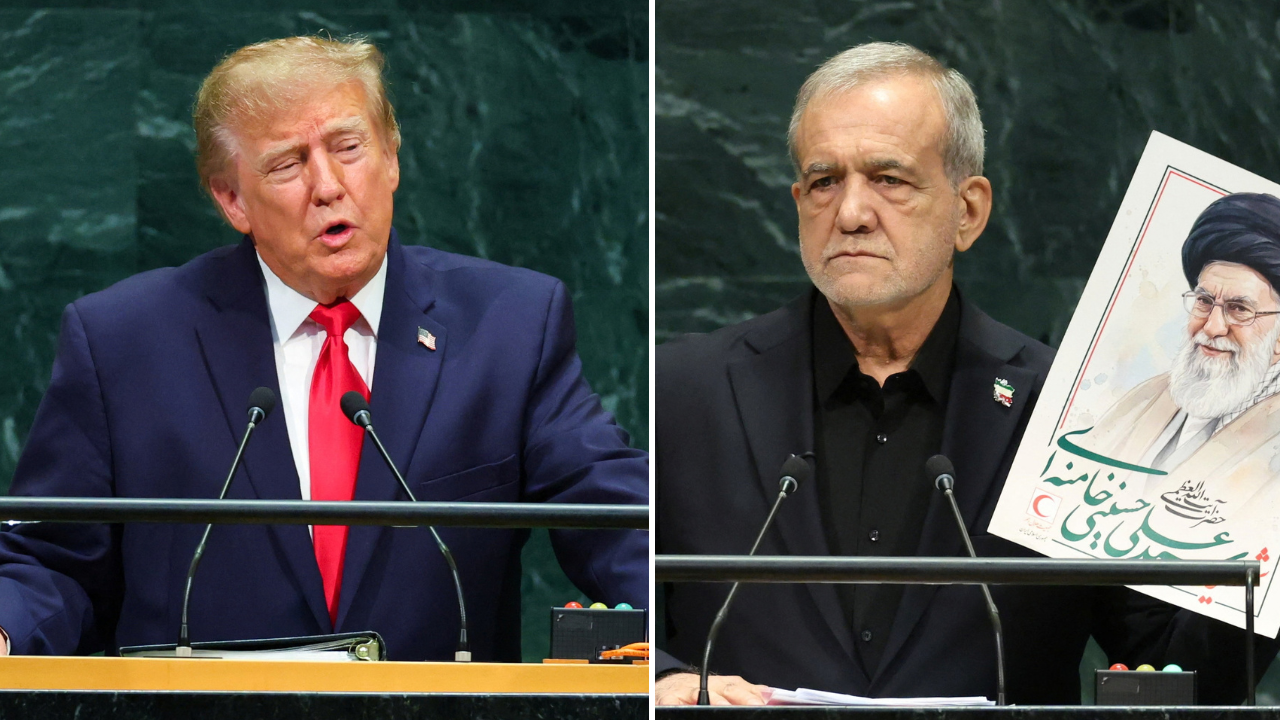
TL;DR Summary
- Iranian President Pezeshkian confronted former US President Trump’s rhetoric at the UN General Assembly, challenging prevailing definitions of terrorism.
- Pezeshkian critically questioned whether certain groups are universally labeled ‘terrorists’ or viewed as ‘victims of terrorism’, depending on geopolitical perspectives.
- The intervention at the UNGA reignited a contentious international discussion on sovereignty, self-determination, and the nuanced classification of armed groups.
In-Depth Report
Iran’s Pezeshkian Challenges Trump-Era Definitions at UNGA
During a recent address at the United Nations General Assembly (UNGA), Iranian President Masoud Pezeshkian delivered a highly anticipated speech that directly confronted the legacy of former US President Donald Trump’s administration and its approach to regional conflicts and designated terrorist organizations. Pezeshkian’s remarks centered on a profound semantic and political challenge, questioning the international community’s inconsistent application of the terms “terrorist” and “victims of terrorism.” This rhetorical offensive marks a significant diplomatic maneuver, placing a spotlight on the subjective nature of these classifications in global discourse.
Pezeshkian meticulously articulated his nation’s perspective, arguing that the designation of groups as “terrorists” often serves geopolitical interests rather than adhering to objective criteria. He highlighted instances where, from Iran’s viewpoint, resistance movements against occupation are indiscriminately labeled as terrorist entities, while state actors committing perceived atrocities escape similar condemnation. This stance implicitly, and at times explicitly, critiqued the framework established or reinforced during Trump’s presidency, which often categorized Iranian-backed groups as principal threats to regional stability.
The Iranian President underscored the human cost of these labels, particularly focusing on populations affected by prolonged conflicts and foreign interventions. He posited that individuals and communities struggling under occupation or foreign influence are often simultaneously cast as perpetrators of terrorism when they engage in armed resistance, thereby obscuring their status as victims of systemic violence or political oppression. This direct challenge aimed to reframe the narrative, urging the UNGA to consider the root causes of extremism and the differential treatment of combatants based on their alignment with global powers.
The speech resonated with various delegations, particularly those from the Global South, who have historically voiced concerns about unilateral definitions of terrorism. While no immediate direct response from former President Trump or his representatives was made at the UNGA, the remarks are expected to provoke substantial commentary and analysis from international relations experts and policymakers, further polarizing an already tense geopolitical landscape.
Background & Context
The historical relationship between Iran and the United States has been characterized by profound mistrust and antagonism, particularly since the 1979 Islamic Revolution. This animosity has frequently manifested in accusations regarding state-sponsored terrorism and the support of proxy groups. Successive US administrations, including Trump’s, have designated various Iranian entities, such as the Islamic Revolutionary Guard Corps (IRGC) and certain allied militias, as terrorist organizations, citing their activities in the Middle East.
Conversely, Iran has consistently viewed many of these US designations as acts of aggression and interference in its sovereign affairs, portraying groups like Hezbollah and various Iraqi militias as legitimate resistance forces against external influences or perceived injustices. Tehran often points to US military interventions in the region, economic sanctions, and support for rival nations as primary sources of instability and terrorism, positioning itself as a victim of state terrorism and economic warfare.
Former President Trump’s “maximum pressure” campaign against Iran, initiated after his withdrawal from the Joint Comprehensive Plan of Action (JCPOA), significantly escalated tensions. This campaign included severe economic sanctions and the unprecedented designation of the IRGC as a Foreign Terrorist Organization. These actions solidified a narrative in Washington that Iran is a primary state sponsor of terrorism, a narrative Pezeshkian’s UNGA speech directly sought to dismantle or, at the very least, complicate.
Why It Matters (Impact Analysis)
Pezeshkian’s UNGA address carries substantial weight for several reasons. Firstly, it represents a bold diplomatic push by Iran to reshape the international discourse surrounding terrorism, potentially challenging the legitimacy of existing sanctions and designations. By highlighting the subjective nature of “terrorist” labels, Iran seeks to garner support from nations that feel similarly marginalized or misunderstood in the global security framework, thereby chipping away at US-led consensus.
Secondly, this confrontation could intensify the already strained relations between Iran and the West, particularly the United States. While Trump is no longer president, his policies and rhetoric continue to influence US foreign policy. Pezeshkian’s direct challenge reinforces the deep ideological chasm between the two nations, making future diplomatic breakthroughs or de-escalation efforts even more arduous. It signals Iran’s unwavering commitment to its strategic narrative, irrespective of who occupies the White House.
Finally, the debate initiated by Pezeshkian has significant implications for international law and human rights. If the definitions of terrorism remain fluid and politically charged, it complicates efforts to establish universal norms for combating non-state armed groups and protecting civilian populations. It also fuels a broader discussion about self-determination versus national security interests, potentially influencing how future conflicts are interpreted and resolved on the global stage.
Key Takeaways
- Pezeshkian’s speech marks a deliberate Iranian effort to redefine international discourse on terrorism, challenging Western-centric classifications and fostering solidarity with nations holding similar grievances.
- The rhetorical clash underscores the enduring ideological divide between Iran and the US, likely exacerbating diplomatic tensions and complicating future engagements on critical regional and nuclear issues.
🔥 Recent Breaking News
- पेझेशकियान UNGAत ट्रम्पना भिडले: 'दहशतवादी' की 'बळी'? (Sep 23, 2026)
- Pezeshkian Slams Trump: 'Terrorist' or 'Victim' Debate? (Sep 23, 2026)
- पेझेशकियान UNGAत ट्रम्पना भिडले: 'दहशतवादी' की 'बळी'? (Sep 23, 2026)
- SC SLAMS CRITICS: 'Judiciary Playing Second Fiddle t... (Sep 23, 2026)