Up to 10-year jail & Rs 10 crore fine: Cabinet clears tougher anti-paper leak Bill
TL;DR Summary
- The Union Cabinet has approved a new Anti-Paper Leak Bill, proposing severe penalties including up to 10 years in jail and a Rs 10 crore fine.
- The Public Examinations (Prevention of Unfair Means) Bill, 2024, targets unfair means in all central government recruitment and entrance examinations.
- Aimed at curbing the rampant issue of paper leaks and exam malpractices, the legislation seeks to restore faith in India’s competitive examination system.
In-Depth Report
The integrity of India’s vast public examination system, a crucial gateway to careers and higher education for millions, is set to receive a significant legal bolster. The Union Cabinet, led by Prime Minister Narendra Modi, has given its nod to the Public Examinations (Prevention of Unfair Means) Bill, 2024. This landmark legislation introduces stringent measures, including prison sentences of up to 10 years and hefty fines reaching Rs 10 crore, for individuals and entities involved in paper leaks and other examination malpractices. The move underscores the government’s resolve to create a fair and transparent environment for India’s aspirants.
Defining and Deterring Unfair Means
The proposed Bill casts a wide net, encompassing all public examinations conducted by central government agencies, including the Union Public Service Commission (UPSC), the Staff Selection Commission (SSC), the Railways, banking recruitment exams, and entrance tests like NEET, JEE, and CUET. It meticulously defines “unfair means” to include, but not limit to, leaking question papers or answer keys, tampering with answer sheets or OMR sheets, providing solutions to candidates during examinations, unauthorized access to computer networks or question paper storage facilities, and manipulation of merit lists. Impersonation, aiding, and abetting such acts are also brought under its purview.
Penalties and Accountability
Under the new provisions, individuals found guilty of committing unfair means could face imprisonment for a term ranging from three to five years and a fine of up to Rs 10 lakh. However, the penalties escalate sharply for organized crime, defined as a group of persons conspiring or engaging in unfair means. Such groups or institutions can face imprisonment from five to ten years and a monumental fine of up to Rs 1 crore. Furthermore, the Bill introduces accountability for examination service providers, including private companies and institutions. If such an organization is implicated, their assets could be forfeited, and the cost of the re-examination would be recovered from them. The offences under this Bill are designated as non-bailable, ensuring that offenders face prompt and serious legal consequences.
Investigative Authority and Legal Process
To ensure swift and effective prosecution, the Bill stipulates that investigations into these offences will be conducted by an officer not below the rank of Deputy Superintendent of Police (DSP) or Assistant Commissioner of Police (ACP). Cases will be tried by fast-track courts, aiming for timely adjudication. This dedicated legal framework is designed to overcome the limitations of relying solely on general sections of the Indian Penal Code, which often proved inadequate in addressing the sophisticated nature of examination malpractices orchestrated by organized syndicates.
Background & Context
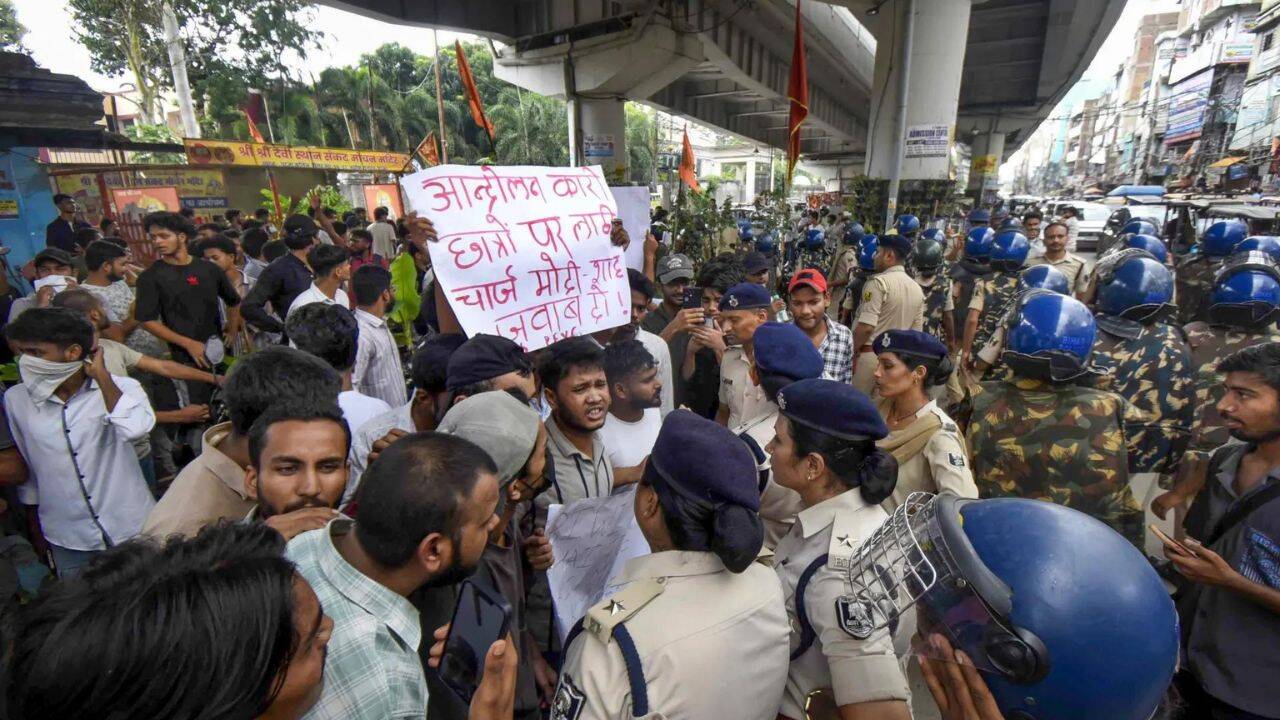
The decision to introduce such a robust central law stems from a disturbing and escalating trend of paper leaks and examination irregularities that have plagued India’s competitive examination landscape for well over a decade. From state-level teacher recruitment exams (TETs) to police constabulary selections, and even national-level tests, news of leaked papers has become distressingly common, leading to repeated cancellations, protests, and a profound erosion of public trust.
In recent years, numerous high-profile cases across states like Rajasthan, Uttar Pradesh, Gujarat, and Haryana have highlighted the systemic nature of these malpractices. These incidents not only cause immense mental and financial distress to lakhs of genuine aspirants who spend years preparing but also impose a substantial economic burden on the exchequer due to the administrative costs of re-conducting examinations. Existing legal frameworks, largely reliant on sections of the Indian Penal Code pertaining to cheating and criminal conspiracy, were often found wanting. They lacked the specific provisions and deterrent force required to effectively combat organized gangs and sophisticated methods employed to compromise examination integrity.
There has been a persistent demand from students, civil society organizations, and even state governments for a comprehensive central law to address this menace. The absence of a unified national policy meant that states often adopted their own specific, sometimes fragmented, laws, leading to inconsistencies and gaps in enforcement. The Public Examinations (Prevention of Unfair Means) Bill, 2024, therefore, represents a direct response to this widespread public concern and a recognition of the urgent need for a potent, uniform legal instrument to safeguard the sanctity of public examinations nationwide.
Why It Matters (Impact Analysis)
This proposed Bill is poised to have a far-reaching and transformative impact on India’s competitive examination ecosystem. Primarily, its enactment promises to restore a much-needed sense of trust and credibility in a system that has been repeatedly undermined by nefarious elements. For millions of young Indians, public examinations are not just tests but pathways to socio-economic mobility and a better future. When these pathways are compromised, it breeds cynicism, despair, and a belief that hard work and merit are not enough. The stringent penalties outlined in the Bill aim to create a powerful deterrent, signaling that engaging in or facilitating paper leaks will carry severe consequences, thus making it a high-risk, low-reward endeavor for offenders.
Furthermore, the legislation’s focus on holding examination service providers accountable is a critical step towards improving the overall security infrastructure of the examination process. It will compel private firms and institutions involved in conducting exams to adopt more robust protocols, invest in advanced security technologies, and rigorously vet their personnel. This institutional accountability is essential to prevent internal compromises and to ensure that the entire chain of examination conduct, from paper setting to result declaration, remains impregnable.
Ultimately, the beneficiaries of this law will be the genuine, hardworking students and their families. By significantly reducing the incidence of paper leaks and malpractices, the Bill aims to ensure that merit truly prevails. It will spare aspirants the emotional trauma, financial burden, and wasted time associated with cancelled exams and endless litigation. On a broader scale, a fairer examination system contributes to a more equitable society, fosters genuine talent, and strengthens the foundational pillars of good governance and national progress. This Bill is not merely about punishing offenders; it’s about safeguarding the aspirations of an entire generation and reinforcing the bedrock principles of justice and equal opportunity.
Key Takeaways
- The Public Examinations (Prevention of Unfair Means) Bill, 2024, is a landmark legislative attempt to decisively curb examination malpractices through severe penalties and comprehensive coverage.
- Its success will critically depend on its rigorous enforcement, transparent implementation by investigation agencies, and a sustained commitment to addressing both the symptoms and root causes of paper leaks across the country.