Supreme Court Questions Exclusion of Chief Justice from Election Commissioner Selection Panel
TL;DR Summary
- The Supreme Court has formally questioned the Central Government regarding the exclusion of the Chief Justice of India from the panel responsible for appointing the Chief Election Commissioner and other Election Commissioners.
- This query stems from a challenge to the new Chief Election Commissioner and Other Election Commissioners (Appointment, Conditions of Service and Term of Office) Act, 2023, which alters the composition of the selection committee.
- The apex court is scrutinizing whether the revised panel adequately ensures the independence and impartiality vital for the electoral body.
In-Depth Report
Supreme Court Expresses Concerns Over Selection Panel Composition
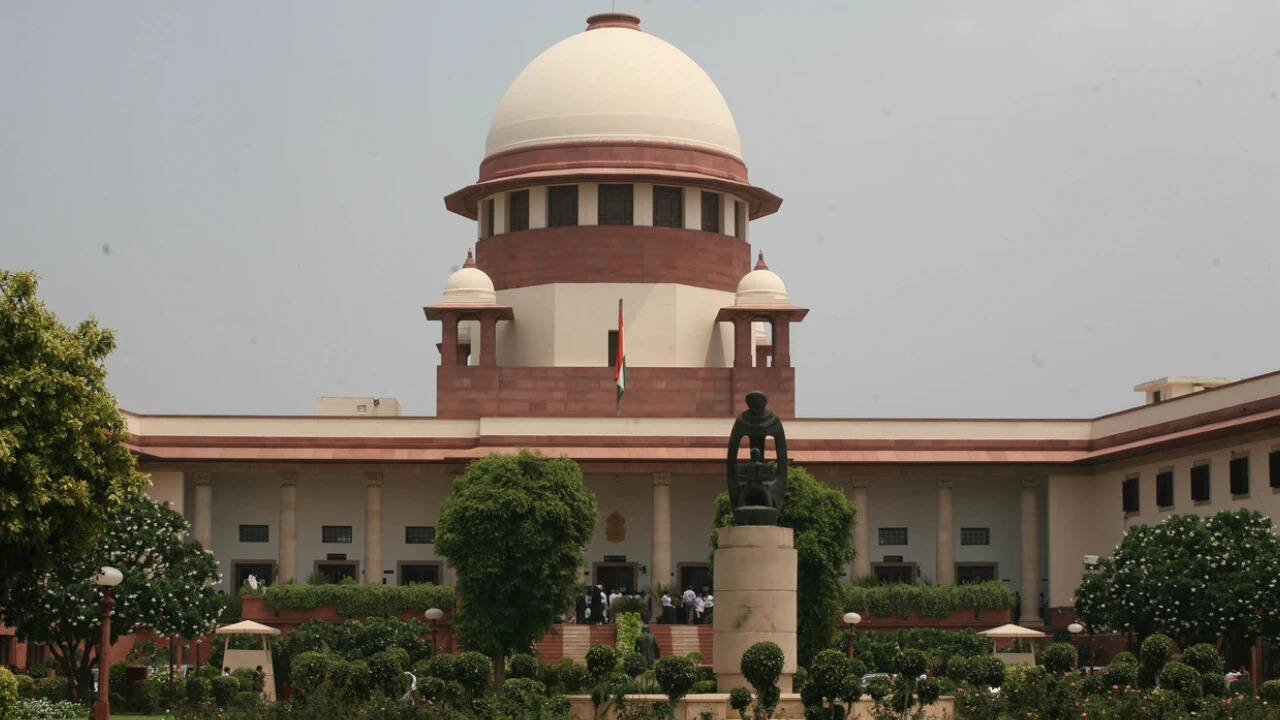
The Supreme Court of India recently posed a pertinent question to the Central Government regarding the legislative exclusion of the Chief Justice of India (CJI) from the high-level committee responsible for appointing the Chief Election Commissioner (CEC) and other Election Commissioners (ECs). A bench comprising Justices Sanjiv Khanna and Dipankar Datta raised this query while hearing petitions challenging the newly enacted Chief Election Commissioner and Other Election Commissioners (Appointment, Conditions of Service and Term of Office) Act, 2023. The apex court’s deliberation underscores significant constitutional concerns regarding the independence of India’s electoral watchdog.
Scrutiny of the New Act’s Provisions
Under the provisions of the new Act, the selection committee for the CEC and ECs now comprises the Prime Minister as chairperson, a Union Cabinet Minister nominated by the Prime Minister, and the Leader of the Opposition in the Lok Sabha. This composition marks a departure from an earlier interim arrangement directed by the Supreme Court itself in March 2023, which had included the Chief Justice of India alongside the Prime Minister and the Leader of the Opposition. The court’s question, “Why was the CJI excluded from the selection committee?” reflects a direct challenge to the parliamentary intent behind the new legislation.
Implications for Institutional Autonomy
The petitioners, including the Association for Democratic Reforms, argue that removing the Chief Justice of India from the selection panel compromises the Election Commission’s autonomy and could expose it to potential executive influence. They contend that the original Supreme Court directive, which sought to ensure a neutral and balanced selection process, has been diluted by the new law. The judiciary’s involvement was perceived as a crucial safeguard against partisan appointments, upholding the sanctity of the electoral process.
Government’s Stance and Judicial Review
While the government is yet to provide its detailed rationale in response to the court’s direct question, its previous arguments have centred on parliamentary supremacy and the legislature’s prerogative to enact laws governing such appointments. However, the Supreme Court’s role as the guardian of the Constitution mandates it to review any law that may infringe upon fundamental rights or alter the basic structure of the Constitution, including the independence of critical democratic institutions. The ongoing proceedings will thus be pivotal in determining the future framework for appointing India’s top election officials.
Background & Context
Historical Appointment Process
Historically, the Chief Election Commissioner and Election Commissioners were appointed by the President of India on the recommendation of the Prime Minister. This system, largely based on executive discretion, had been in place for decades. While conventions and the integrity of individuals often ensured fair appointments, there had been sporadic calls for a more transparent and independent selection mechanism to enhance public confidence in the Election Commission’s impartiality.
The Landmark Anoop Baranwal Verdict
In March 2023, a five-judge Constitution Bench of the Supreme Court, in the landmark Anoop Baranwal v. Union of India case, ruled that the appointment of the CEC and ECs would, until Parliament enacted a specific law, be made on the advice of a committee comprising the Prime Minister, the Leader of the Opposition in the Lok Sabha, and the Chief Justice of India. This interim directive was intended to insulate the Election Commission from executive dominance and ensure a selection process that inspired greater trust and credibility. The court’s ruling stemmed from a recognition of the Election Commission’s critical role in a democratic setup and the need for its unimpeachable neutrality.
Enactment of the New Law
Following the Supreme Court’s directive, the government introduced and subsequently passed the Chief Election Commissioner and Other Election Commissioners (Appointment, Conditions of Service and Term of Office) Act, 2023, in December of the same year. This legislation effectively superseded the interim arrangement mandated by the Supreme Court. Crucially, the new Act altered the composition of the selection committee by replacing the Chief Justice of India with a Union Cabinet Minister nominated by the Prime Minister, thereby bringing the current challenge before the Supreme Court.
Why It Matters (Impact Analysis)
Safeguarding Electoral Integrity and Public Trust
The composition of the selection panel for the Chief Election Commissioner and other Election Commissioners is fundamental to maintaining the integrity and impartiality of India’s electoral process. The Election Commission of India is a cornerstone of the nation’s democracy, responsible for conducting free and fair elections. Any perception of executive influence in its appointments can erode public trust in electoral outcomes, which is detrimental to democratic principles. The Supreme Court’s intervention, therefore, is crucial for upholding the institution’s perceived and actual independence.
Upholding Separation of Powers
This legal challenge also carries significant implications for the doctrine of separation of powers, a foundational aspect of India’s Constitution. The judiciary’s role in scrutinizing legislative actions, particularly those impacting the autonomy of independent constitutional bodies, ensures that no single branch of government oversteps its boundaries. The outcome of this case will define the extent to which the executive can shape the selection process for critical oversight institutions, thereby setting a precedent for the balance of power within the state.
Future of Constitutional Bodies
Beyond the Election Commission, the resolution of this matter could influence the appointment processes for other independent constitutional bodies in India. A ruling that reinforces the need for a truly independent selection mechanism could lead to broader reforms, ensuring that institutions vital for democratic checks and balances are adequately protected from undue political pressure. Conversely, a weakening of such safeguards could pave the way for increased executive discretion in appointments across various critical sectors.
Key Takeaways
- The Supreme Court’s ongoing deliberation is vital for determining the future framework of Election Commission appointments and reinforcing its constitutional autonomy.
- The ultimate decision will significantly impact India’s democratic institutions, the principles of separation of powers, and public confidence in the electoral system.
🔥 Recent Breaking News
- "SC Asked Me To Face Bullets": Mahua Moitra Allege... (Aug 15, 2026)
- मोइत्रांचा धक्कादायक दावा: 'SC ने गोळ्या झेलण्यास सा... (Aug 15, 2026)
- महूआ मोइत्रा: 'SC ने कहा गोलियों का सामना करो' - रात... (Aug 15, 2026)
- PoK Could Have Joined J&K If... Omar Abdullah's Claim! (Aug 15, 2026)
- "पाकव्याप्त काश्मीर भारतात असते तर...": उमर अब्दुल... (Aug 15, 2026)