SC SLAMS CRITICS: 'Judiciary Playing Second Fiddle t...
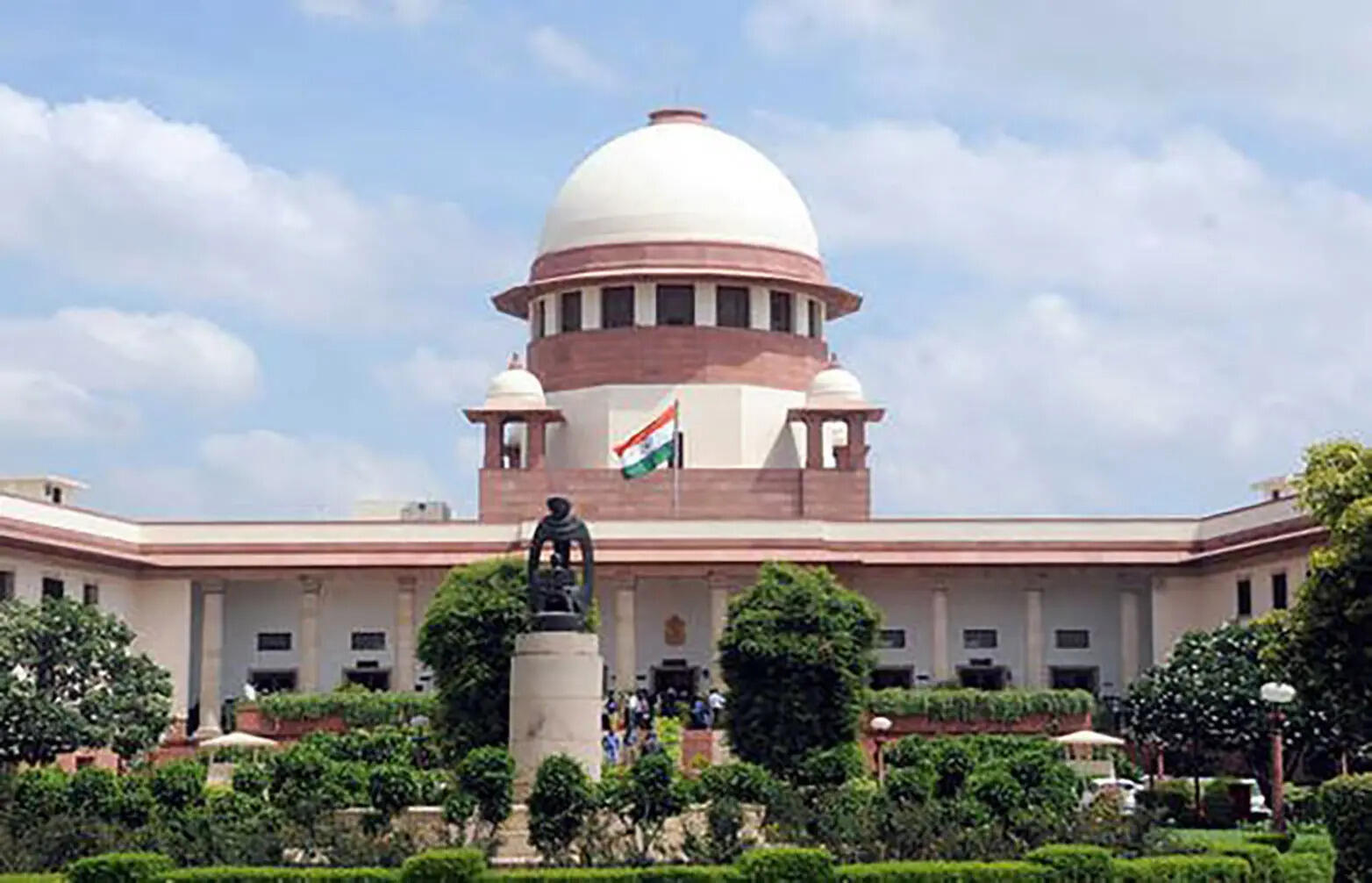
TL;DR Summary
- The Supreme Court delivered a strong rebuke to critics of its Collegium system for judicial appointments.
- The apex court voiced concerns that the judiciary might be perceived as subservient to the government.
- This pronouncement highlights escalating tensions concerning judicial independence and the appointment process.
In-Depth Report
The Supreme Court of India has issued a stern admonition to those critical of its Collegium system, explicitly articulating concerns that the judiciary risks being perceived as playing a secondary role to the executive government. This significant observation underscores growing friction between the judicial and executive branches regarding the process of appointing judges to higher courts. The remarks were made during a recent hearing, where the bench expressed apprehension over sustained public and governmental scrutiny of the Collegium’s functioning.
The Court’s statement emphasized the fundamental principle of judicial independence, asserting that constant criticism and the resultant delays in judicial appointments erode public trust and potentially compromise the autonomy of the judiciary. Such strong language from the apex court is indicative of its resolve to safeguard its constitutional mandate and ensure the effective functioning of the justice delivery system. The bench highlighted that the judiciary’s capacity to function independently is paramount for upholding the rule of law and democratic principles.
These comments arrive amid ongoing debates surrounding the transparency and efficacy of the Collegium system, which is responsible for selecting judges for the Supreme Court and High Courts. Critics, including certain government functionaries, have often called for reforms, suggesting greater executive involvement or a more transparent selection mechanism. The Supreme Court’s current stance, however, firmly pushes back against these critiques, interpreting them as attempts to dilute judicial authority.
The dialogue between the judiciary and the government over judicial appointments has seen periods of both cooperation and contention. The latest remarks from the Supreme Court signal a hardening of its position, indicating a firm defense against any perceived encroachment on its exclusive domain in judicial selection. This development is expected to intensify the ongoing discourse surrounding the balance of power between India’s constitutional institutions.
Background & Context
The Collegium system, through which judges of the Supreme Court and High Courts are appointed and transferred, evolved from a series of Supreme Court judgments, notably the “Three Judges Cases” (1981, 1993, and 1998). These landmark rulings established the primacy of the Chief Justice of India and a collegium of senior-most judges in matters of judicial appointments, effectively limiting the executive’s role to consultation. This system was devised to insulate the judiciary from political interference, safeguarding its independence.
Despite its foundational objective, the Collegium system has faced persistent criticism for its perceived lack of transparency, accountability, and the absence of a defined selection criteria. Various political parties, legal luminaries, and civil society groups have, over the years, called for its reform, advocating for a more institutionalized and transparent process. The government has often voiced concerns regarding the opacity of the Collegium’s decision-making and the delays in filling judicial vacancies.
A significant attempt to reform the Collegium system came with the passage of the National Judicial Appointments Commission (NJAC) Act in 2014. The NJAC aimed to replace the Collegium with a body comprising judges, the Law Minister, and eminent persons, thus giving the executive a more significant say in judicial appointments. However, in 2015, the Supreme Court declared the NJAC Act unconstitutional, asserting that it threatened judicial independence by allowing executive interference. This ruling reaffirmed the Collegium’s supremacy and has been a point of contention ever since, contributing to the current friction between the branches.
Why It Matters (Impact Analysis)
The Supreme Court’s strong observations carry profound implications for the Indian constitutional framework and public governance. Firstly, it underscores the critical importance of judicial independence as a cornerstone of India’s democratic structure. Any perceived erosion of this independence can significantly impact the judiciary’s ability to act as a neutral arbiter, safeguard fundamental rights, and uphold the Constitution against executive overreach. This is vital for maintaining public trust in the justice system.
Secondly, the ongoing tension over judicial appointments can lead to delays in filling vacant judicial positions, which in turn exacerbates the existing backlog of cases across various courts. A shortfall of judges not only impedes the timely delivery of justice but also places an undue burden on the existing judiciary, potentially affecting the quality of judgments and increasing the overall inefficiency of the legal system. This directly impacts citizens seeking timely redressal of their grievances.
Finally, this development highlights the delicate balance of power enshrined in the Constitution. The robust defense by the Supreme Court against executive influence is a strong reaffirmation of the separation of powers doctrine. It sets a precedent for how future interactions between the judiciary and the executive might unfold, potentially shaping the discourse on institutional autonomy, governmental accountability, and constitutional interpretation in the years to come. The outcome of this debate will profoundly influence the future trajectory of India’s democratic institutions.
Key Takeaways
- The Supreme Court’s assertive defense of its independence signals a critical juncture in the power dynamics between India’s constitutional bodies.
- Sustained dialogue and potential reforms regarding judicial appointments are likely, underscoring the imperative of maintaining robust institutional checks and balances for democratic health.
🔥 Recent Breaking News
- Pezeshkian Slams Trump: 'Terrorist' or 'Victim' Debate? (Sep 23, 2026)
- पेझेशकियान UNGAत ट्रम्पना भिडले: 'दहशतवादी' की 'बळी'? (Sep 23, 2026)
- Pezeshkian Slams Trump: 'Terrorist' or 'Victim' Debate? (Sep 23, 2026)
- पेझेशकियान UNGAत ट्रम्पना भिडले: 'दहशतवादी' की 'बळी'? (Sep 23, 2026)
- SC SLAMS CRITICS: 'Judiciary Playing Second Fiddle t... (Sep 23, 2026)